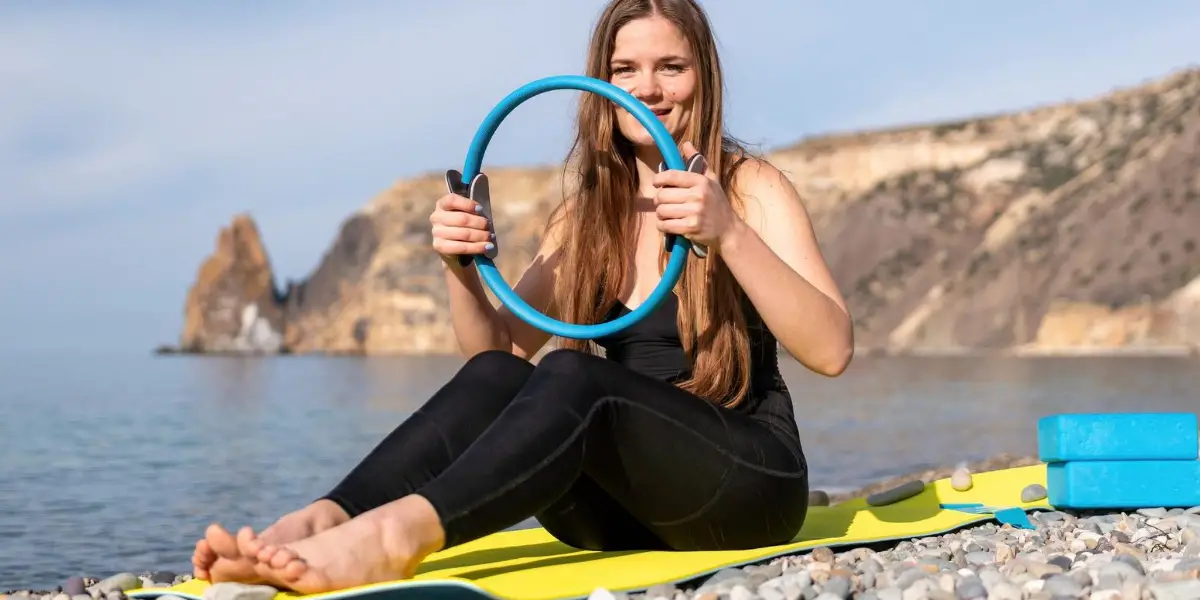
Pilates rings — also called magic circles, fitness circles, or exercise rings — are one of the most useful and affordable things you can add to your Pilates practice. They add resistance and variety without taking up any real space, and they work for all fitness levels. Here’s what to look for when buying one.
Size
Pilates rings typically come in sizes between 12 and 15 inches in diameter. A 14-inch ring works for most people — it’s versatile enough to use in almost every exercise, whereas larger rings can feel awkward in certain positions. If you can, try a few sizes at your local studio before buying. Instructors are usually happy to talk through what they use and why.
Material
The original Pilates rings were made from metal — Joseph Pilates reportedly fashioned the first one from the flexible rings found around beer barrels. These days, most are made from a flexible plastic core with a soft rubberised shell. That’s what I use and what I use with clients: they’re strong, resilient, and provide excellent tension for core work.
If you do come across a metal ring, be aware they’re heavier and will cause fatigue more quickly. For beginners, stick with plastic.
Resistance
The resistance level you need depends on your current strength. Metal rings are sometimes classified by the number of bands (2-band for light, 3-band for medium, 4-band for heavier). Plastic rings often label resistance as light, moderate, or firm.
Beginners should start with light or medium resistance. The point of the ring is to add gentle challenge, not to make exercises feel impossible. You can always move up as you get stronger.
Padding
Look for pads on both the inside and outside of the ring. The inner pads make it far more comfortable to hold between your legs or hands, and they stabilise the ring so it doesn’t slip during exercises. Single-sided padding (outside only) is more limited in how it can be used.
Brand and reviews
There are a huge number of rings on the market at very low prices, and quality varies. If you’re buying online, always read the customer reviews — not just the product description. Look for consistent feedback on resistance quality, durability, and whether the grip holds up with regular use.
How much to spend
You don’t need to spend much. A good quality ring costs between £12–£25 ($15–$30). More expensive options tend to be designed for studio and commercial use. For home practice, the mid-price range is more than adequate and should last for years of regular use.
There’s a good selection available on Amazon — I’ve linked to a curated range here: Pilates rings on Amazon. Amazon is also useful because returns are generally straightforward, so you can try a size in your own home and swap if it’s not right.
What muscles do Pilates rings target?
The ring isn’t designed for one specific muscle group — that’s part of what makes it so useful. It can be used for upper or lower body work: squeezed between the thighs for inner thigh and pelvic floor activation, pressed between the palms for chest and arm work, or used in a variety of mat exercises to add extra resistance to core movements.
Beyond Pilates, rings have also found their way into yoga, aerobics, and general fitness routines. The magic circle nickname has stuck for good reason.
Once you have a ring, see my post on how to use a Pilates ring for glutes for targeted exercises. If you are deciding between a ring and a resistance band, see my comparison of Pilates ring vs resistance bands.