Pilates is a versatile workout that fits into almost any time of day, and a lot of my clients ask whether it is safe to do it after eating. The short answer is yes, with some timing considerations.
How long after eating should you wait?
The general recommendation is to wait at least one to two hours after a main meal before doing Pilates. After a large meal, digestion is still ongoing, and Pilates relies heavily on the abdominal muscles — working them while your stomach is full can cause cramping, bloating, and difficulty taking deep breaths. Nutrition experts tend to suggest two to three hours as the ideal gap for a full meal.
That said, it depends on what you have eaten. A light snack an hour before class is usually fine; a large evening meal needs more time. Learn to read your own body’s signals — if you feel heavy or uncomfortable when you start, give yourself more time next session.
Can you do Pilates on an empty stomach?
Yes, but keep in mind that low blood sugar can cause dizziness or lightheadedness during a session, particularly during sequences that require sustained core engagement. If you are exercising first thing in the morning, a small snack about an hour before is a sensible idea rather than going completely empty.
Most of my Pilates sessions are peanut butter powered. I use it to make quick snacks that keep me going through the day, and a small amount before a class genuinely helps. A banana is another good option — small, easy to digest, and a good source of potassium which can deplete during any form of exercise.
Best foods before a session
As a general rule, avoid fatty foods and anything high in caffeine before Pilates — both can affect energy levels and make it harder to focus.
Some options that work well:
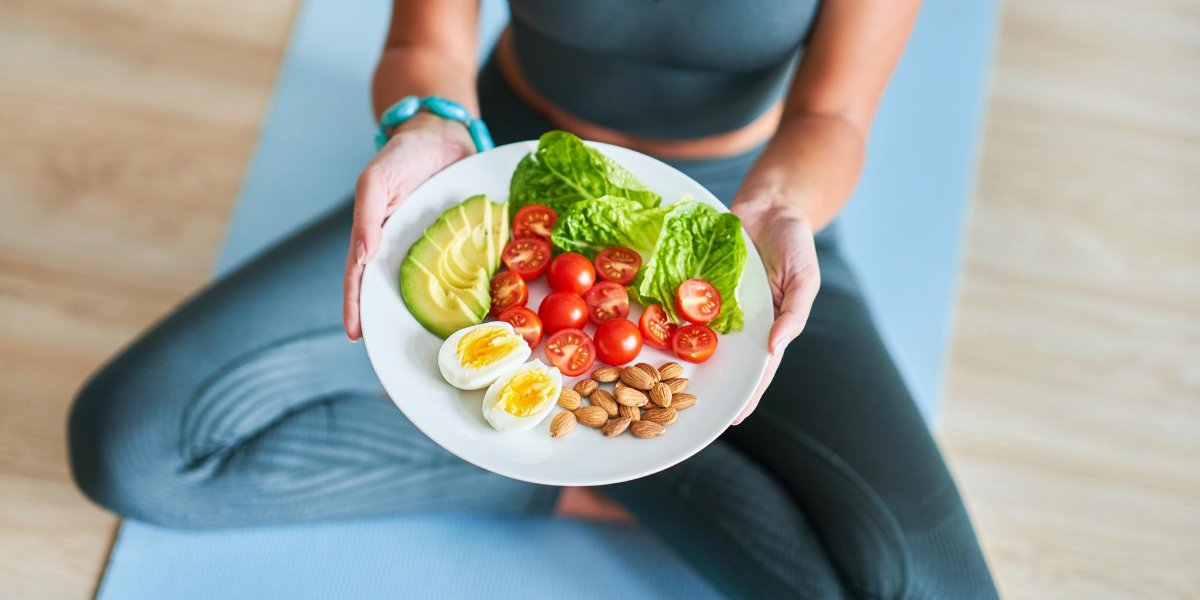
Breakfast sessions: porridge with a touch of honey and some fruit.
Main meal before an afternoon class: something protein-based and not too heavy — a chicken salad, or if you are plant-based, a meal built around high-protein legumes or tofu.
Snacks: fruit, nuts, yogurt, peanut butter on vegetables.
Eating after Pilates
Aim to eat something within 60 minutes of finishing your session. Pilates keeps the body in a gentle recovery mode after class, and refuelling with protein and complex carbohydrates supports that process. A scrambled egg wrap, tuna and brown rice, or salmon with roasted vegetables all work well. A smoothie is a good option if you are not yet hungry for a full meal — protein powder with almond milk, fruit, and chia seeds digests easily and gives the body what it needs.
Modifications if you have a full stomach
If you are caught in a situation where you have eaten more than planned before a class, some adjustments help. Avoid exercises that involve deep twisting at the waist or significant spinal flexion. Reduce the number of repetitions and focus on the quality of each movement rather than pushing intensity. Stay well hydrated, and let your instructor know so they can suggest appropriate modifications for that session. Your body will tell you what it needs — listen to it.
For the complementary question of what to eat before a session, see should Pilates be done on an empty stomach. For guidance on pre-workout supplements, see should you take a pre-workout before Pilates.