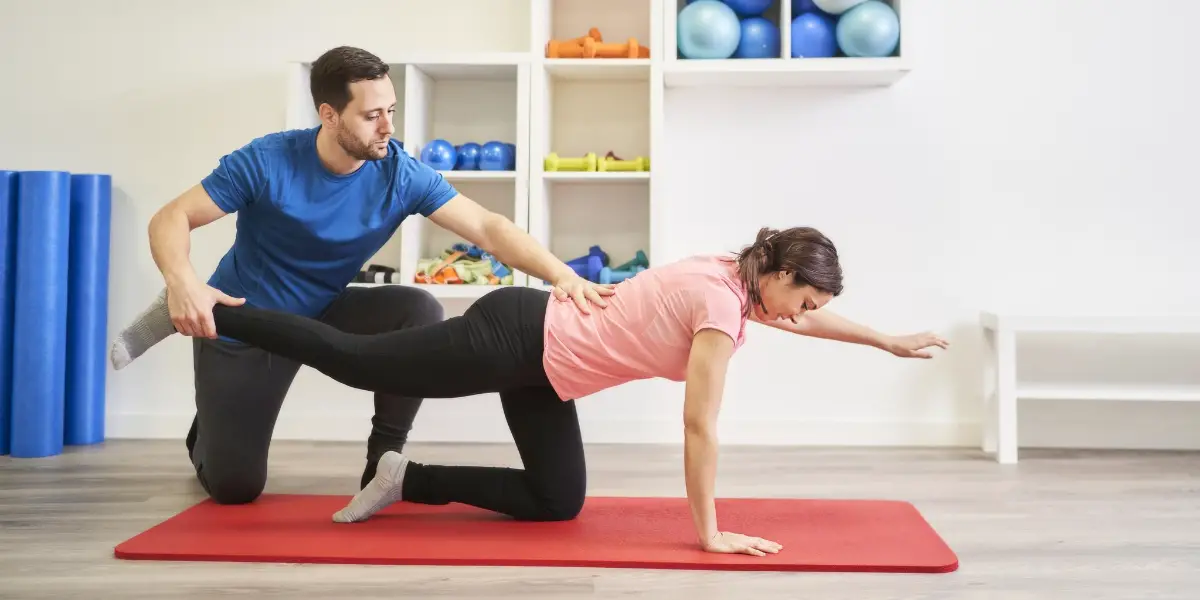
One of the tricky things about Pilates is that it can be hard to tell whether you’re doing it right, especially early on. The movements are controlled and precise — not the kind of exercise where effort is measured in sweat. Here are eleven signs that your practice is on track.
1. You feel balanced between left and right
Symmetry is a core principle of Pilates. If one side consistently feels weaker, stiffer, or harder to work than the other, it’s worth mentioning to your instructor — it might be something as simple as footwear or a habitual pattern in how you hold your body. When the practice is working, you’ll feel both sides responding more equally over time.
If balance is something you specifically want to work on, standing Pilates exercises are excellent for this:
2. You notice more mobility in daily life
This one often surprises people. It’s not the sessions themselves that reveal the change — it’s the morning when you get out of bed without stiffness, or the moment you reach for something overhead and realise how much easier it is than it used to be. Improved mobility in everyday movement is one of the clearest signs that Pilates is working.
3. You’re getting stronger
Pilates builds strength differently from weight training — it’s less visible, more felt. The core stability, improved posture, and muscular endurance it develops should make you feel more capable in your body: steadier, more upright, more comfortable with sustained physical effort. If that feeling is growing, you’re doing it right.
4. The exercises are getting easier
Think back to your first session. Were there exercises you couldn’t finish? Positions that felt impossible? If those same exercises feel manageable now, that’s exactly how progress in Pilates works. Movements that once challenged you at 100% effort should start requiring 70%, 60%, 50% — freeing you to focus on quality rather than just survival.
5. You’re engaging your core
For most beginners, just getting through the movements is the goal. Core engagement comes later, once your body has learned the shapes. When you start to consciously activate your deep abdominals before and during exercises — rather than just hoping your core is doing something — that’s a real milestone.
Adding small hand weights is a useful way to challenge core engagement once you’re confident in the movements:
6. Your body feels relaxed during the session
Pilates isn’t designed to leave you braced and tense. Even during demanding exercises, the practice should feel controlled rather than strained. A good check: notice your face. If your jaw is clenched and your neck is rigid, you’re fighting the movement. When you’re doing it right, you’ll feel effort in the right muscles without everything else tensing up around it.
7. Your breath and movement are connected
In Pilates, each movement corresponds to an inhale or exhale. At first this coordination is conscious and a bit awkward. Over time it becomes natural — your breath leads the movement rather than the other way around. When you reach that point, the practice feels completely different. Smoother, more efficient, more intentional.
8. Your posture is improving
Many people notice they feel slightly taller after a Pilates class. That’s not imaginary — the work of lengthening the spine and activating the postural muscles genuinely carries over into how you stand and sit. When you start catching yourself sitting more upright without thinking about it, or someone comments that you’re carrying yourself differently, Pilates is doing its job.
9. You’re more mindful throughout the day
Pilates requires sustained focus — you’re thinking about your alignment, your breath, and your muscle engagement throughout every exercise. That quality of attention can carry over. Many regular practitioners find they become more aware of their body in general: how they’re sitting, how they’re breathing, whether they’re holding tension somewhere. That mindfulness is a genuine benefit of the practice.
10. You have fewer aches and pains
One of the most valued outcomes of consistent Pilates practice is a reduction in the background aches that accumulate from sedentary work, repetitive movement patterns, or simply getting older. Back pain, neck tension, hip tightness — these often improve as the stabilising muscles around the joints get stronger. It’s a slow change, but a meaningful one.
11. Your body composition is changing
Pilates won’t produce dramatic weight loss on its own, but consistent practice does change how the body looks and feels. The muscles become more defined, posture improves, and the overall shape often becomes longer and leaner. The number on the scales may not shift much — muscle weighs more than fat — but if your clothes are fitting differently and you feel more comfortable in your body, that’s the practice working.