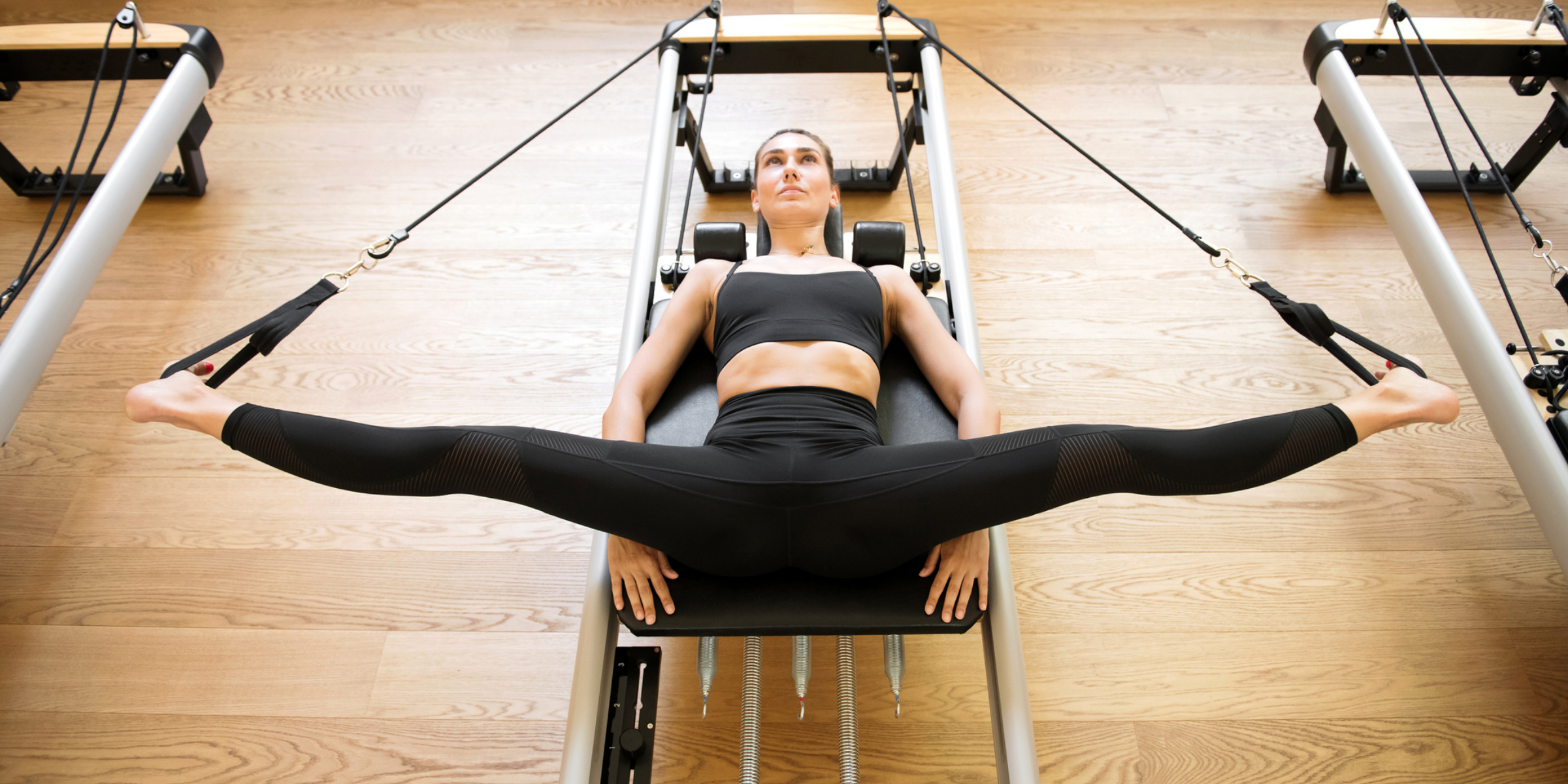
Sequencing a Pilates class well is what separates a workout that flows from one that feels disjointed. Whether you’re an instructor planning sessions or someone building a home practice, thinking about the order of your exercises makes a real difference to how the body responds.
Here’s how I approach it.
Step 1: Choose a theme or a prop
Start with a clear focus for the session. That might be a body area (core, hips, spine mobility), a goal (flexibility, strength, coordination), or a piece of equipment (reformer, ball, magic circle, resistance band).
Having a theme does two things. It makes planning the exercises easier because you have a framework to build around. And it makes the class feel purposeful rather than random, which matters for students who want to understand what they’re working on and why.
Step 2: Map out your exercises
Write down every exercise you can think of that fits your theme. Don’t filter at this stage. The goal is a full list you can then shape into something logical.
Once you have your list, think about position flow. Moving from lying down to sitting to standing and back again repeatedly is tiring and disruptive. Try to group exercises by position and find transitions that feel natural. A well-sequenced class lets students focus on the work, not on constantly getting up and down.
As you’re mapping, make sure the session touches all the major muscle groups, even if the theme is specific. A session focused on the core should still include some spinal extension, not just flexion.
Step 3: Build in the three essentials
Every Pilates session needs three things, in this order:
A warm-up. This isn’t just going through the motions. A good warm-up brings the student’s attention inward, establishes the breath, and prepares the specific muscle groups you’re about to work. Five to ten minutes is typically enough. Breathing exercises, gentle spinal articulation, and hip mobility work are all good starting points.
The main work. This is where you challenge the body and build on what the warm-up prepared. Work through your theme here, starting with moderate intensity and building. Exercises should feel connected, not like a random collection of moves.
A cool-down. Close the session with static stretches and calming movement. This brings the heart rate down, reduces the likelihood of stiffness the following day, and gives students a chance to settle before they leave. Don’t skip this to fit in one more exercise.
Step 4: Add variety over time
The same routine done week after week stops being challenging. Muscles adapt, focus drifts, and the mind-body engagement that makes Pilates effective starts to diminish.
You don’t need to overhaul things completely. A small variation — a different prop, a new exercise in a familiar position, a slower tempo — keeps the session fresh. Try to stay within your theme when you vary things, so students still feel the logical progression rather than a random change of direction.
Step 5: End with intention
The last few minutes of the class set the tone for how students carry the session with them. Choose exercises that slow the tempo, allow the breath to settle, and bring awareness back to how the body feels. A class that ends abruptly leaves students feeling unfinished. A class with a clear, calm close leaves them feeling accomplished.
A note on classical sequences
If you’re learning to structure classes from scratch, the classical Pilates sequences passed down from Joseph Pilates are worth studying. The original mat sequence from Return to Life Through Contrology is a masterclass in how exercises build on each other — each one prepares the body for the next.
Understanding why those exercises are in that order teaches you the principles behind sequencing far better than any formula can. You can find examples of classical sequences from the mat, spine corrector, magic circle, and small barrel all across YouTube, as well as on platforms like Pilatesology if you want something more structured.
How long should a session be?
A well-rounded session is typically 45 minutes. That gives enough time for a warm-up, proper main work, and a cool-down without rushing. If you only have 20 or 30 minutes, shorten the main work rather than dropping the warm-up or cool-down — those parts matter.
For most people, three sessions a week is a good baseline. You’ll notice changes within the first 10 sessions. Real strength and postural improvements typically show up around 20 sessions. Consistency over time is more important than any single session.