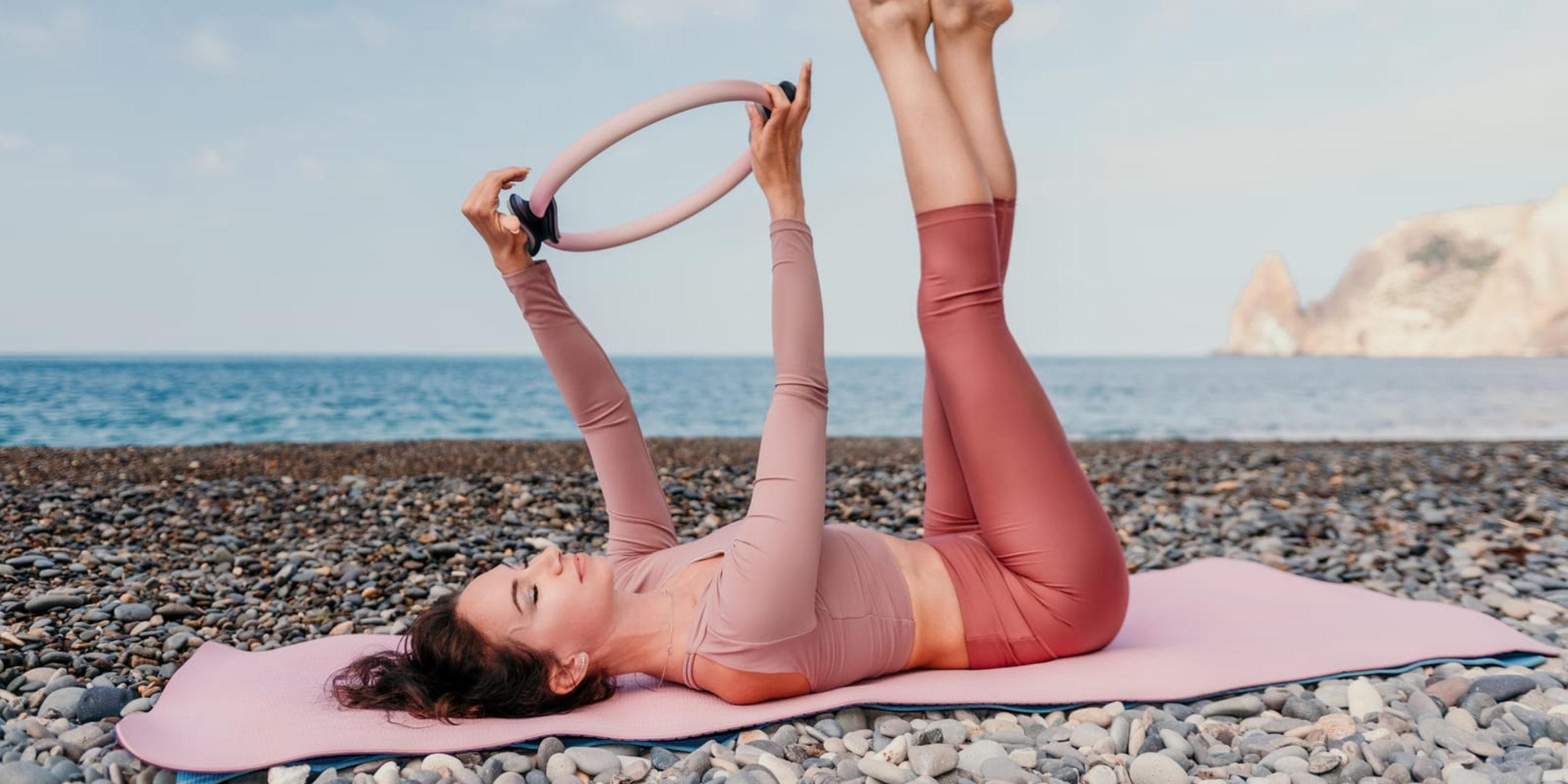
Yoga rings and Pilates rings are essentially the same thing — a small, flexible circle with padded handles, designed to add resistance to exercise. Whether you call it a magic circle, fitness ring, or yoga ring depends more on the context you encountered it in than on any real difference in the equipment.
So do they work? Yes — with the right expectations.
What they actually do
The ring provides resistance when you squeeze or press it. That resistance activates the muscles involved in the movement more intensely than the same movement without the ring. The key benefit isn’t raw strength-building (the ring doesn’t offer enough resistance for that) — it’s targeted activation of muscles that are otherwise hard to isolate.
The inner thighs are the classic example. Squeezing the ring between your legs in exercises like leg circles, bridges, or standing work fires the adductors and pelvic floor in a way that’s genuinely difficult to replicate without it. The same applies to chest work with the ring pressed between the palms, or shoulder and arm exercises holding it overhead.
What they’re best used for
- Adding gentle resistance to Pilates exercises — bridges, leg work, side-lying sequences
- Deepening stretches — pressing against the ring to create resistance that helps you hold and extend a position
- Improving posture and alignment awareness — holding the ring correctly in certain exercises encourages better body positioning
- Core activation — the ring can make mat exercises more demanding by engaging stabilising muscles that would otherwise stay passive
What to look for when buying one
Size: 14 inches is the most versatile diameter for most people. It works across arm, leg, and core exercises without feeling awkward in any position.
Material: Plastic with a rubberised shell is the most common and practical option. Metal rings exist but are heavier and less comfortable — not necessary for most practitioners.
Resistance: For beginners, light to medium resistance is the right starting point. The goal is activation and control, not maximum effort. You can always work up.
Padding: Look for pads on both the inside and outside of the ring. Inner pads make it far more comfortable for leg exercises, and they stabilise the ring during use.
Is it worth buying?
Yes — especially if you practise Pilates or yoga regularly at home. A good quality ring costs between £12 and £25, takes up almost no storage space, and adds meaningful variety to sessions that might otherwise feel repetitive. It’s one of the better-value accessories available for home practice.
It won’t transform your fitness on its own, and it’s not a substitute for a reformer or a properly structured programme. But as an addition to a regular practice, it earns its place.