If you’re new to the Pilates reformer, the springs can feel confusing. There are different colours, different numbers depending on the machine, and instructors who say things like “add a spring” or “take a spring off” without much explanation. Here’s what it all means.
What the springs do
The springs connect the carriage — the sliding platform you move on — to the frame of the reformer. They provide resistance. When you push or pull the carriage, you’re working against their tension. More springs means more resistance; fewer springs means less.
This is one of the things that makes the reformer so versatile. By adjusting which springs you’re using, you can make any exercise easier or harder, and you can change whether you’re working on strength, control, or support. An exercise that’s very challenging on three springs might be nearly impossible on four — and quite manageable on two.
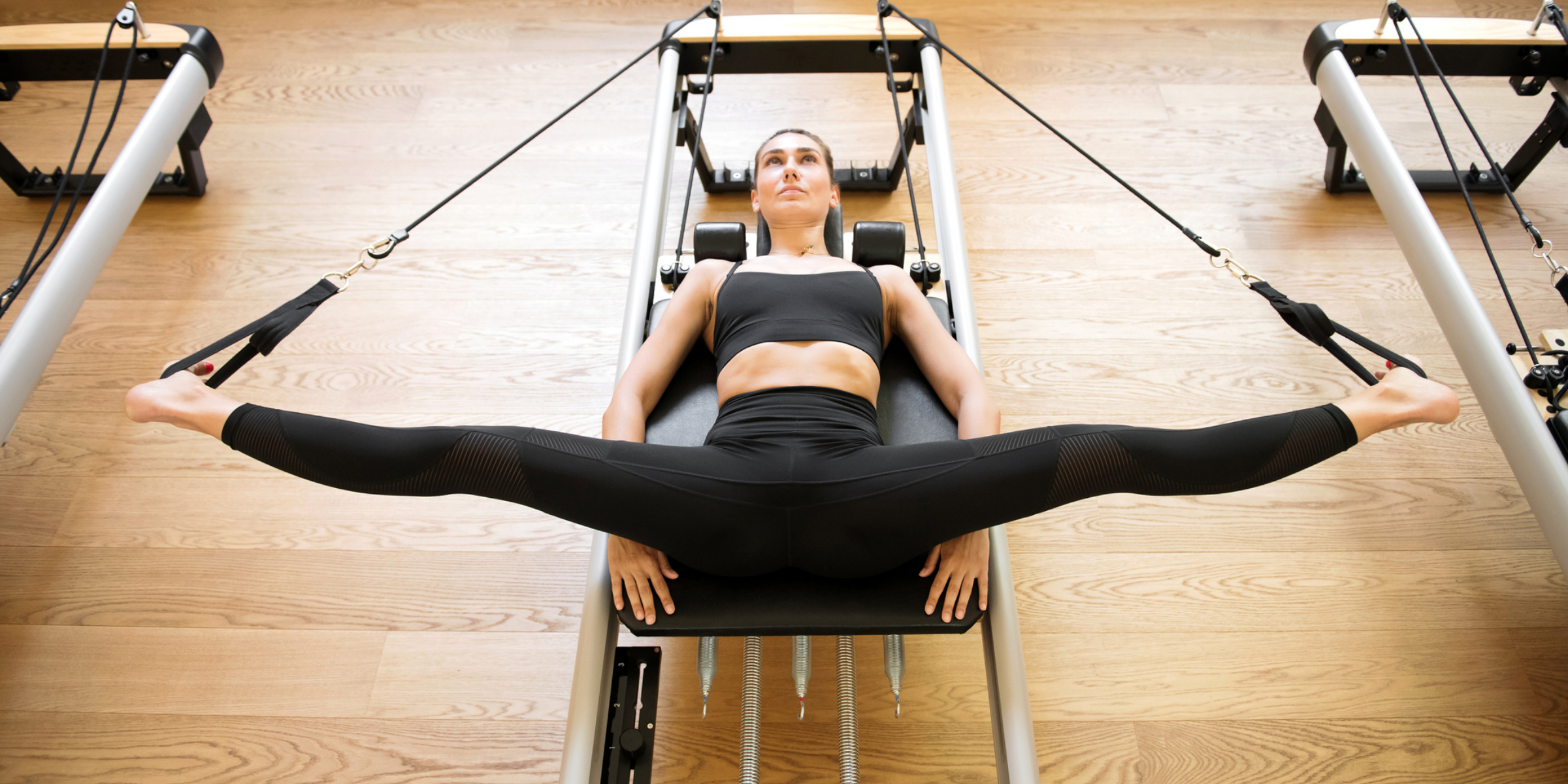
Here’s a workout I recorded on my own reformer so you can see the springs in action:
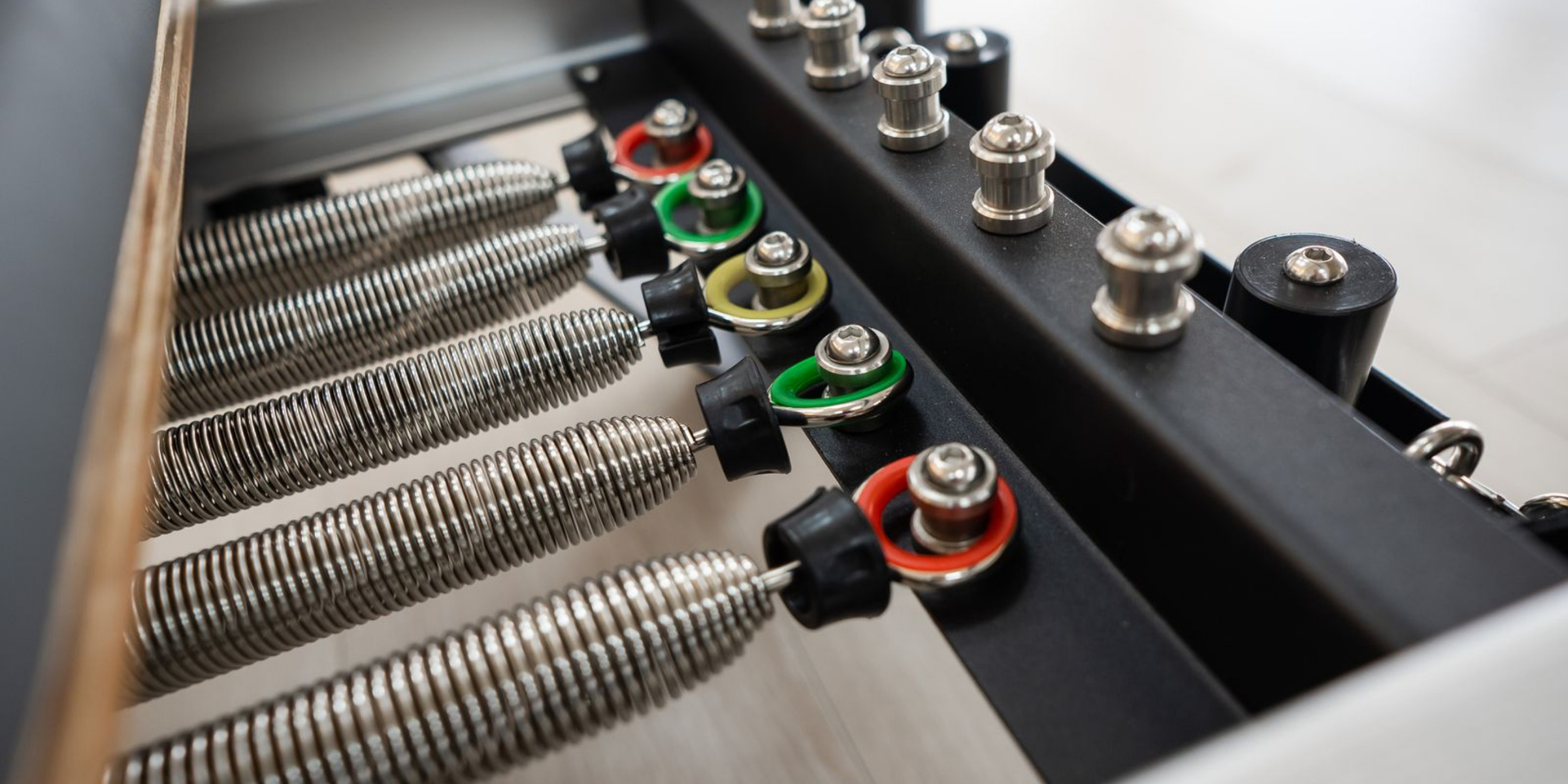
Spring colours and what they mean
Most reformers colour-code their springs to indicate resistance level. The most common system you’ll encounter is:
- Yellow — very light resistance
- Blue — light resistance
- Red — medium resistance
- Green — heavy resistance
That said, the colours aren’t universal. Different manufacturers use different colour systems, which means a red spring on one reformer isn’t necessarily the same resistance as a red spring on another. If you move between studios or machines, always check the spring system used rather than assuming the colour carries across.
How many springs does a reformer have?
Most reformers have four or five springs, though the number and configuration varies by brand. Here’s how the major brands set up their systems:
- Balanced Body — five colour-coded springs: yellow (lightest), blue, red, green, and purple (heaviest)
- Gratz — four springs of equal resistance, similar to the original equipment Pilates himself used
- Peak Pilates — five springs, colour-coded by resistance level
- Merrithew (STOTT) — five springs of mixed resistance, colour-coded but without a fixed resistance level assigned to each colour
- AeroPilates — uses bungee cords rather than springs, with black cords of equal tension
Choosing the right spring tension
There’s no single right answer — it depends on the exercise, your bodyweight, your strength level, and what the exercise is designed to achieve. Some exercises use the springs for support (lighter tension helps you move with more control), while others use them for resistance (heavier tension makes the work harder).
A few general principles:
- Beginners often start with more springs for support, and reduce as strength and confidence build
- Leg exercises typically use heavier spring tension than arm exercises
- Many advanced exercises use lighter settings because the challenge comes from precision and control, not from adding more resistance
If you’re unsure where to start, ask your instructor. They’ll recommend appropriate settings for your body and the exercise, and adjust as you progress. Getting the tension right makes a real difference to how well an exercise works — and how safely you’re able to perform it.