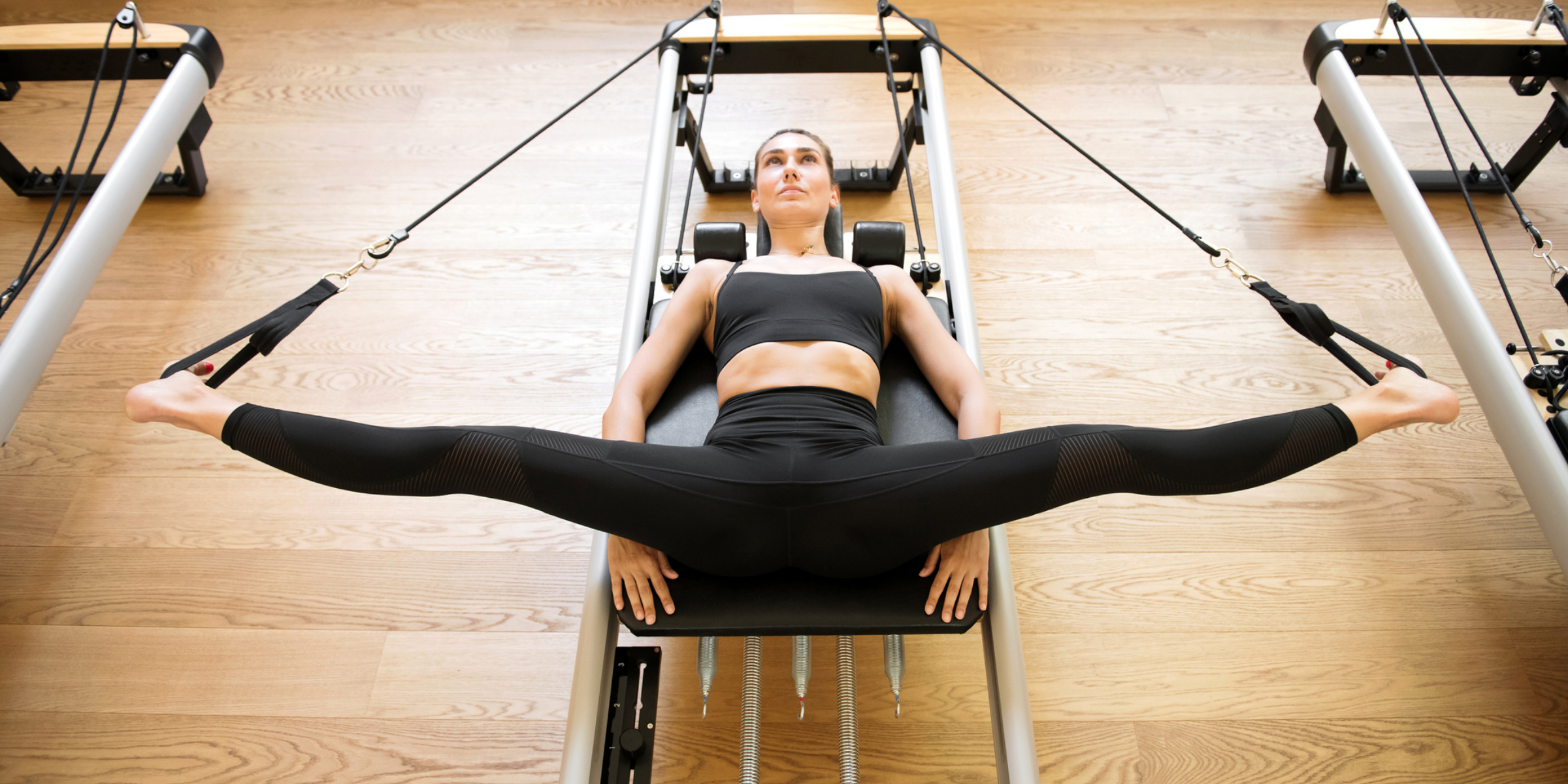
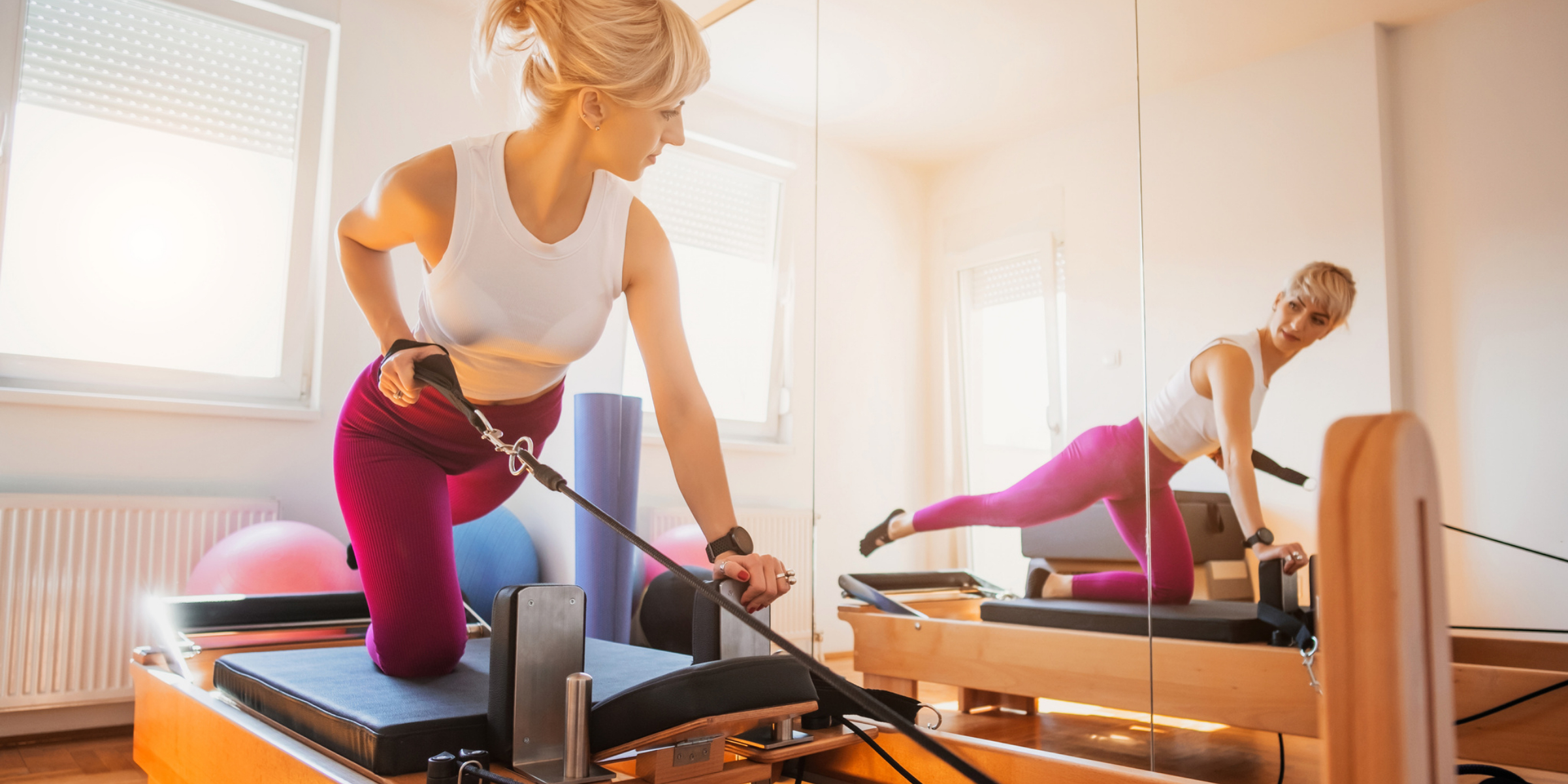
The Pilates reformer’s spring system determines how challenging or supportive each exercise feels. Getting familiar with the basics means you can adjust with confidence rather than guessing, and tailor each session to where your body actually is on any given day.
How the spring system works
Most reformers have four or five springs with varying levels of resistance, from very light to heavy. Attaching more springs makes the carriage harder to move; using fewer creates lighter resistance. The position of the spring attachment also affects the feel of a movement, so the same number of springs at different points along the spring bar can produce a noticeably different experience.
Springs can either resist movement or assist it, which is why the reformer works well for both building strength and rehabilitation. In footwork, the springs are typically providing resistance; in exercises like short spine, they assist and resist at different points of the same movement.
Beyond the springs, the gear bar adjusts the carriage’s starting position, and rope length accommodates different arm and leg lengths. Both affect how an exercise feels even when the spring load stays the same.
Wondering why springs come in different colours? See my post on reformer springs explained for a full breakdown of what each colour means.
Tension settings for common exercises
These are general starting points. Every reformer brand calibrates its springs slightly differently, and your instructor may adjust these based on your body, goals, and where you are in your practice. Use them as a guide rather than a fixed rule.
Footwork series: Begin with moderate to heavy tension to properly engage the legs and core. Reduce the load for rehabilitation or if you are new to reformer work, and build gradually as strength develops.
The Hundred: A lighter setting generally works best, allowing the arms to move freely while the core stays consistently engaged throughout.
Leg circles and froggies: Moderate tension keeps the movement controlled. Lighter tension allows more hip mobility work; heavier tension increases the focus on leg strength.
Short spine massage: Moderate to heavy tension supports the spine and legs through the movement. Beginners or those with limited flexibility may find a lighter setting more comfortable to start with.
Rowing series: Moderate tension gives a balanced challenge for the upper body and core. Reduce it to focus on form; increase it for a more demanding upper body workout.
Long stretch series: Heavier tension provides the stable platform needed for plank and push-up variations. Reducing it slightly shifts more of the challenge onto core stability.
Stomach massage series: Moderate to heavy tension supports the position while allowing a good range of movement. Lighter tension increases the core demand; heavier emphasises the leg work.
Chest expansion: Moderate tension works well for both the arms and upper back. Increase it to build upper body strength; reduce it to focus on posture and alignment.
Elephant: Heavier tension provides stability and keeps the focus on the legs and core. A lighter setting shifts more challenge onto alignment and precision.
Teaser series: Light to moderate tension allows controlled movement and core engagement. Beginners often benefit from lighter support; those with more experience can increase the load gradually for an added challenge.
Adjusting safely
If you are new to the reformer, work with a certified instructor for your first sessions so they can recommend appropriate starting tensions for your needs. Once you have a baseline, you can adjust from there with confidence.
Always prioritise form over load. The temptation to add resistance is natural, but increasing tension without maintaining good alignment tends to reduce the benefit of the exercise and raises the risk of strain. If something feels off, reduce the springs and focus on the quality of the movement first.
Increase tension gradually across sessions rather than in large jumps, and pay attention to how your body responds in the following day or two. Some muscle soreness after a new challenge is normal; persistent joint discomfort is not.
Springs and ropes wear over time. Check them periodically for signs of fraying or uneven tension. Worn equipment produces inconsistent resistance regardless of the setting, so it is worth replacing parts before they become a problem.
For guidance on the other adjustable elements of your reformer — footbar height, gear bar, headrest, and shoulder blocks — see my post on setting up your reformer carriage.