Pilates counteracts the postural damage of all-day sitting by strengthening your core, which naturally supports your spine when desk muscles weaken. It releases tension in chronically tight areas like hip flexors and chest muscles while activating underused back muscles. The exercises improve thoracic mobility and train your body to resist gravity’s forward pull. Even quick desk-friendly moves like seated spine twists and chin tucks can reset your alignment. Discover how these targeted techniques can transform your workday comfort.
The Desk Worker’s Postural Challenge
While many of us chase fitness goals at the gym or on weekend hikes, our bodies face a silent battle during those 9+ hours we spend hunched over our desks each day.
You’re not alone if you’ve felt the telltale ache in your neck, shoulders, or lower back—these pains affect over half of all office workers.
Your workstation might be working against you. Monitors placed too low force your head forward, chairs without proper support encourage a rounded spine, and poorly positioned keyboards strain your shoulders.
Your desk is a silent saboteur—setting up ergonomic traps that your body falls into day after day.
When combined with a work culture that discourages movement breaks, it’s no wonder 80% of desk workers report some form of musculoskeletal pain. Studies show that 65% of workers develop musculoskeletal issues directly attributed to prolonged desk work. Failing to alternate between sitting and standing positions every 30 minutes can significantly worsen these postural problems.
This sedentary lifestyle contributes significantly to the weakening of core muscles which are essential for proper spinal support.
The consequences go beyond discomfort—each additional hour of sitting increases your risk of obesity, diabetes, and even mental health issues.
Core Stability: Your Natural Back Support System
Your body comes equipped with its own natural posture-support system—one that doesn’t require expensive ergonomic chairs or standing desks. This internal support system is your core muscles, working together like a cylindrical brace around your spine.
When your deep core muscles—transversus abdominis, multifidus, internal obliques, and others—activate properly, they create a 360-degree support structure that maintains your spine in its ideal position. Think of them as your body’s built-in corset!
Your brain coordinates this muscle team, automatically adjusting tension to keep you upright. Regular practice of exercises like the plank can significantly enhance this natural stabilization system. These muscles act as the body’s natural back brace, providing essential support to protect the spine from injury.
Unfortunately, prolonged sitting weakens this system, leading to that all-too-familiar slouch. The good news? You can reawaken these muscles through targeted exercises that reconnect your brain with your core, restoring your natural posture support.
Spinal Mobility Exercises to Counter Stiffness
Pilates offers a powerful arsenal of exercises to free your spine from the daily grind of sitting, including thoracic twist progressions that release mid-back tension.
You’ll also benefit from pelvic mobility series that reconnect your lower back with proper alignment, preventing that all-too-familiar stiffness that creeps in after hours at your desk.
The spine-lengthening techniques in Pilates work like a reset button for your posture, creating space between vertebrae and helping you stand taller with less effort. Setting up regular break reminders throughout your workday can enhance the effectiveness of these exercises by preventing muscle fatigue and tension build-up. Incorporating these movements into your daily routine helps combat the negative effects of prolonged sitting, which significantly contributes to back pain and discomfort experienced by many office workers.
Thoracic Twist Progressions
Because our modern lives often chain us to desks for hours each day, thoracic twist exercises have become vital weapons against the stiffness that gradually infiltrates our upper backs.
You’re not imagining it—gravity really does win during those long sitting sessions, pulling your shoulders forward and locking up your spine.
The beauty of Pilates-based twists is their simplicity and effectiveness. Limited mobility in the thoracic spine causes strain and compensation in other areas of the body, leading to potential injuries.
Try starting seated with your arms crossed over your chest, then rotate slowly as you exhale, imagining yourself growing taller. For a more targeted approach, try the quadruped thoracic rotation exercise which specifically addresses upper and middle back stiffness. Aim for three rotations per side, and repeat the sequence 4-5 times.
Your breathing will naturally deepen as your rib cage gains more mobility, delivering more oxygen throughout your body.
Practicing these twists 3-4 times weekly can dramatically improve your posture and energy levels.
Pelvic Mobility Series
Three key regions of your body—the pelvis, lumbar spine, and core muscles—work together as a dynamic foundation for proper posture.
When you’re stuck sitting all day, these areas tighten up, throwing your entire alignment off balance.
Pilates-based pelvic exercises like pelvic tilts and curls can transform your posture by targeting these problem zones.
These movements activate your deep core muscles, especially the transversus abdominis and multifidus, while improving flexibility in your lumbar spine.
You’ll feel the difference after just four weeks of consistent practice!
Try incorporating glute bridges and seated spinal twists into your routine. A sedentary lifestyle contributes significantly to spinal stiffness and related postural problems.
They’ll help counteract that annoying anterior pelvic tilt that comes from too much chair time.
Your back will thank you, and you’ll stand taller without even thinking about it!
Core stabilization exercises are particularly effective at alleviating chronic pain while restoring proper postural alignment.
Spine-Lengthening Techniques
When your spine becomes compressed from hours of sitting, it creates a cascade of postural problems that can leave you feeling stiff and hunched over.
Pilates offers powerful solutions through axial elongation exercises that reorganize your spine into ideal alignment.
You’ll learn to create space between vertebrae while connecting your ribcage to your hips, preventing the overload that causes those nagging aches.
The beauty of these techniques? They counter the forward head posture and rounded shoulders that creep in during marathon desk sessions.
Releasing Tension in Chronically Tight Muscles
As our modern lives trap us in prolonged sitting positions, our bodies develop predictable patterns of muscle tension that can wreak havoc on our posture. Your chest tightens while your upper back weakens, creating that all-too-familiar hunch.
Our sedentary lifestyle creates a tension blueprint—tightening what should be loose, weakening what should be strong.
Meanwhile, your poor hip flexors shorten from being bent all day, and your glutes fundamentally fall asleep on the job!
Pilates helps break this tension cycle by targeting these chronically tight areas. When you release that 60% extra pressure on your discs from slouching, you’ll immediately feel relief.
Your breathing deepens as tight muscles stop restricting your ribcage, allowing oxygen-rich blood to flow freely again. This isn’t just about comfort—it’s interrupting a chronic pain cycle that, left unchecked, could lead to more serious issues down the road.
Building Upper Body Strength for Better Alignment
Your forward-slouching shoulders aren’t just a cosmetic issue—they’re weakening your entire upper body and contributing to that nagging back pain.
Pilates shoulder stabilization exercises strengthen the muscles between your shoulder blades, gently pulling your shoulders back into proper alignment.
You’ll notice that as these muscles become stronger, your chest naturally opens and your neck tension diminishes, making it easier to maintain good posture throughout your day.
Shoulder Stabilization Benefits
Proper shoulder alignment stands at the core of good posture, and Pilates offers powerful techniques to achieve it. When you practice Pilates consistently, you’re activating those deep core muscles that support your shoulder girdle, keeping everything in its rightful place.
Your rotator cuff muscles—those tiny but mighty stabilizers—get strengthened through controlled, mindful movements. This isn’t just about looking better; it’s about creating sustainable support systems in your body. Those hours hunched over your desk won’t stand a chance!
The beauty of Pilates lies in how it retrains your muscle recruitment patterns. You’ll develop what experts call “dynamic stability”—the ability to maintain proper alignment even while moving.
With improved proprioception (your body’s position awareness), you’ll catch yourself slouching and naturally reset your shoulders without even thinking about it.
Counteracting Forward Posture
Forward-hunching posture has become epidemic in our screen-obsessed world. Your upper back muscles weaken while your chest tightens, pulling your shoulders forward in a vicious cycle.
Pilates directly targets this problem by strengthening your upper back and opening your chest.
Here’s how Pilates helps reverse the forward slump:
- Strengthens the rhomboids and trapezius muscles between your shoulder blades
- Stretches tight pectoral muscles that pull your shoulders forward
- Increases thoracic spine mobility to support proper alignment
- Develops core stability that maintains your upright position
When you practice these movements regularly, you’re training your body to resist the forward pull of gravity.
You’ll feel the difference in your ability to sit tall without constant reminders, and you’ll breathe easier as your chest opens.
Developing Body Awareness for Self-Correction
Many of us move through our day completely unaware of how we’re holding our bodies. Pilates changes this by developing your proprioceptive awareness—your internal body sense.
Through core engagement exercises like The Hundred, you’ll learn to draw your navel to spine while maintaining natural spinal curves, fundamentally creating a mind-body connection that stays with you at your desk.
Core work in Pilates isn’t just exercise—it’s posture education that follows you back to real life.
You’ll notice something remarkable happening: as you practice slow, precise movements with proper breathing techniques, you’re actually retraining your nervous system. Your body begins to recognize proper alignment versus slouching.
Those mirror exercises in class? They’re teaching you to spot and correct your own posture errors in real time. Soon, you’ll catch yourself self-correcting automatically throughout your workday—no instructor needed.
Quick Pilates Exercises You Can Do at Your Desk
Five minutes is all you need to transform your workday with these desk-friendly Pilates exercises.
You’ll feel the difference immediately as tension melts away from your overworked muscles.
Try these simple moves throughout your day:
- Seated Spine Twist – Sit tall and gently rotate your torso side to side, engaging your core and improving thoracic mobility.
- Dumb Waiter – With elbows bent at 90 degrees, open your forearms outward to activate your shoulder muscles and reset your posture.
- Neck Chin Tuck – Gently draw your chin back without moving your shoulders to counteract that dreaded “tech neck.”
- Seated Side Bend – Reach one arm overhead while stretching sideways to open tight obliques and relieve shoulder tension.
Your body will thank you for these mini-breaks that combat the effects of sitting.
Frequently Asked Questions
How Soon Can I Expect to Notice Postural Improvements From Pilates?
You’ll notice early awareness within 1-4 weeks, with visible postural improvements emerging after 4-8 weeks of consistent practice. Stick with 2-4 sessions weekly for the best results in correcting your sitting posture.
Can Pilates Help With Existing Chronic Pain From Poor Posture?
Yes, Pilates can effectively reduce your existing chronic pain from poor posture. It strengthens core muscles, improves spinal alignment, and boosts postural control—all while teaching you pain management strategies that work for long-term relief.
How Many Pilates Sessions per Week Are Necessary for Posture Benefits?
You’ll need 2-3 sessions weekly for noticeable posture benefits. Beginners should start with two sessions, while intermediate practitioners can aim for three to four weekly sessions to accelerate your posture improvement.
Are Equipment-Based or Mat Pilates Better for Desk-Related Posture Issues?
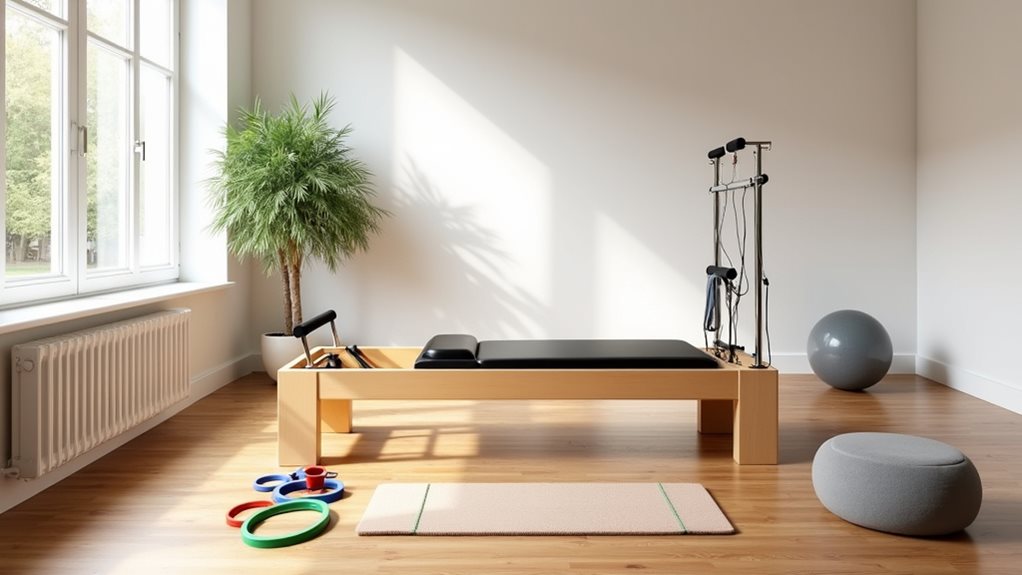
Both have benefits, but reformer Pilates may be better for your desk-related posture issues as it provides targeted resistance and joint support while allowing precise engagement of weakened postural muscles through adjustable spring tension.
Can Pilates Exercises Worsen Existing Back or Neck Problems?
Yes, Pilates can worsen existing back or neck problems if you use incorrect technique, progress too quickly, or don’t modify exercises for your specific condition. Always seek professional guidance to guarantee safe, appropriate practice.
Final Thoughts
You’re not doomed to poor posture just because you work at a desk all day. Pilates offers powerful tools to counteract the effects of sitting, helping you build core strength, improve spinal mobility, and develop body awareness. With consistent practice and the desk exercises we’ve shared, you’ll stand taller, feel better, and take control of your posture. Your body will thank you—and you might even gain an inch in height!