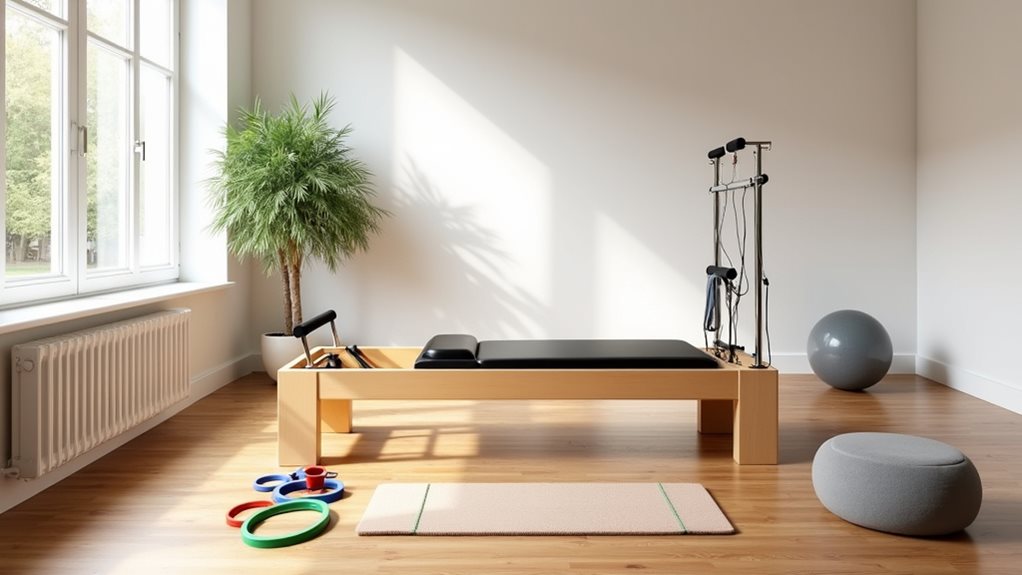
Pilates can complement but not fully replace strength training. You’ll get excellent core strength, better posture, and joint health from Pilates, while traditional strength work builds more muscle mass and boosts metabolism. A hybrid approach gives you the best results—try using Pilates for warm-ups or cool-downs with your strength sessions. You’ll need just 2-3 Pilates workouts weekly to see improvements in stability and flexibility. The perfect fitness formula might be hiding in this balanced combination.
The Biomechanical Impact: How Each Exercise Affects Muscles and Bones
When you’re deciding between Pilates and strength training, understanding how each affects your body at the structural level can help you make the right choice.
Pilates offers bone-loading benefits through controlled movements like lunges and squats, though it’s generally lower impact than traditional strength training.
While Pilates markedly improves muscle strength in your core, arms, and legs, it won’t build the same level of raw strength or muscle size as heavy lifting. What it excels at is boosting muscle coordination and control through slow, deliberate movements.
Pilates shines in its approach to joint health—it emphasizes neutral spine positioning and balanced muscle activation, reducing stress on your joints and discs. The focus on quality and precision rather than repetition ensures proper form and maximum benefit from each movement. Practicing Pilates three times weekly provides noticeable improvements in bone strength and functional mobility compared to less frequent sessions.
You’ll also gain better balance and motor control, which traditional strength training doesn’t always address as thoroughly. For athletes seeking to enhance performance, Pilates offers injury prevention benefits by strengthening muscles around joints and improving overall body alignment.
Core Development and Mobility: Where Pilates Shines Brightest
While both exercise modalities offer numerous benefits, Pilates truly stands out when it comes to core development and mobility improvements.
You’ll experience remarkable gains in abdominal strength—up to 36% on average—through Pilates’ unique “centering” principle that activates your entire core efficiently.
Unlike traditional strength training, Pilates engages both strong and weak muscles simultaneously, creating balanced full-body development rather than isolated strength.
Your posture will improve as your spine stabilizes, reducing strain on your neck and shoulders during everyday movements.
Stand taller as Pilates strengthens your spine, freeing your neck and shoulders from daily stress.
The flexibility benefits are equally impressive, with consistent practice boosting your functional capacity through controlled movement patterns. Research shows experienced Pilates practitioners demonstrate significantly higher scores in functional movement screening tests compared to novices.
You’ll notice better dynamic posture and increased mobility that complements your strength gains.
Pilates techniques emphasize alignment and lengthening which contribute to improved overall body mechanics and reduced risk of injury.
For anyone seeking the perfect balance of core power and fluid movement, Pilates delivers exceptional results.
Metabolic Benefits: Comparing Caloric Expenditure and Long-Term Effects
Despite their similar focus on strength development, Pilates and traditional weight training deliver particularly different metabolic impacts during and after your workouts.
When you’re choosing between these popular exercise methods, understanding their caloric burn patterns can help you align your fitness routine with your goals.
- Classical mat Pilates burns a modest 170-250 calories hourly, while reformer sessions can reach 300-500+ calories.
- Traditional strength training typically burns 250-500 calories per hour depending on intensity.
- Strength training creates a stronger “afterburn effect” that continues burning calories post-workout.
- While Pilates builds lean muscle, weight training’s muscle mass gains provide a higher resting metabolic rate.
- High-intensity Pilates variants like Lagree can bridge the gap, burning 350-800+ calories per session.
You’ll get metabolic benefits from both, but strength training typically delivers greater long-term calorie-burning potential. BODYROK Pilates offers a particularly efficient option with quick transitions and resistance that significantly elevate heart rate compared to traditional methods. Lagree Fitness maintains your heart rate at a higher percentage of maximum capacity compared to traditional Pilates, creating a more effective metabolism boost that extends beyond the workout session.
Injury Prevention and Accessibility Across Fitness Levels
Both Pilates and strength training offer powerful protection against injuries, but they approach this benefit through different pathways. Pilates focuses on core stability and balanced muscle tension, making it particularly effective for deep stabilizer activation—those essential muscles that support your joints during high-impact activities.
What makes Pilates stand out is its accessibility. It’s perfect if you’re older, recovering from injury, or just starting your fitness expedition. You’ll need only 2-3 sessions weekly for about eight weeks to see real improvements in balance and stability.
The mind-body connection you’ll develop helps correct poor movement patterns that often lead to injuries. Pilates enhances proprioception and awareness of your body’s position, helping you respond better to physical stimuli. Pilates sessions can be strategically scheduled as short workouts on recovery days between more intense training, making it easy to integrate into any fitness regimen.
Don’t worry about experience—whether you’re using just your bodyweight or a reformer, your instructor can modify exercises to match your unique needs and goals.
Creating the Perfect Hybrid: Integrating Both Modalities for Optimal Results
The strongest fitness regimens often combine multiple disciplines, and that’s exactly what makes a Pilates-strength training hybrid so powerful.
You’ll experience extensive benefits by weaving together controlled Pilates movements with traditional strength exercises in a single session. Your deep stabilizing muscles get activated through Pilates principles, priming your body for more effective lifting while reducing injury risk. The ideal hybrid approach focuses on how one feels rather than just physical appearance. The new Pilates x Lift program offers five unique workouts that perfectly demonstrate this effective combination approach.
- Perform Pilates exercises as warm-ups to activate your core before compound lifts
- Alternate between strength sets and Pilates sequences to increase time under tension
- Use Pilates movements between strength exercises for active recovery
- Incorporate resistance bands or light weights into Pilates sequences for progressive overload
- End strength workouts with Pilates cool-downs to promote blood flow and flexibility
Frequently Asked Questions
How Often Should I Practice Pilates Versus Strength Training Each Week?
Aim for 2-3 strength training sessions and 2-4 Pilates workouts weekly. You’ll get ideal results with the “3-2-1” model: three strength days, two Pilates days, one cardio day, and one rest day.
Can Pilates Help Improve Performance in Specific Sports?
Yes, Pilates can considerably boost your sports performance by improving core stability, enhancing functional strength, preventing injuries, and developing sport-specific skills like better throwing speed, running economy, and proprioceptive awareness during movement.
Is Pilates or Strength Training Better During Pregnancy?
A hybrid approach is best during pregnancy. You’ll benefit from Pilates’ pelvic floor and postural improvements while strength training maintains muscle mass and bone density. Both together support better maternal outcomes and easier delivery.
How Quickly Will I See Results From Each Exercise Method?
You’ll see strength training results faster—visible muscle changes within weeks and substantial gains in 8-12 weeks. Pilates delivers noticeable flexibility and posture improvements around 4 weeks, with more defined muscle tone by 12 weeks.
Do Age or Gender Affect Which Exercise Type Is More Beneficial?
Yes, age and gender do affect exercise benefits. As you age, you’ll need strength training for bone density and muscle mass. Women often see better posture and flexibility results from Pilates, while men typically gain more from resistance training.
Final Thoughts
You don’t need to choose between Pilates and strength training—they’re complementary partners in your fitness expedition. While Pilates excels at core strength and flexibility, traditional weight training builds raw power and bone density. Your ideal routine might combine both, adapting as your goals evolve. Listen to your body, consider your personal objectives, and remember that the best exercise program is one you’ll actually stick with consistently.