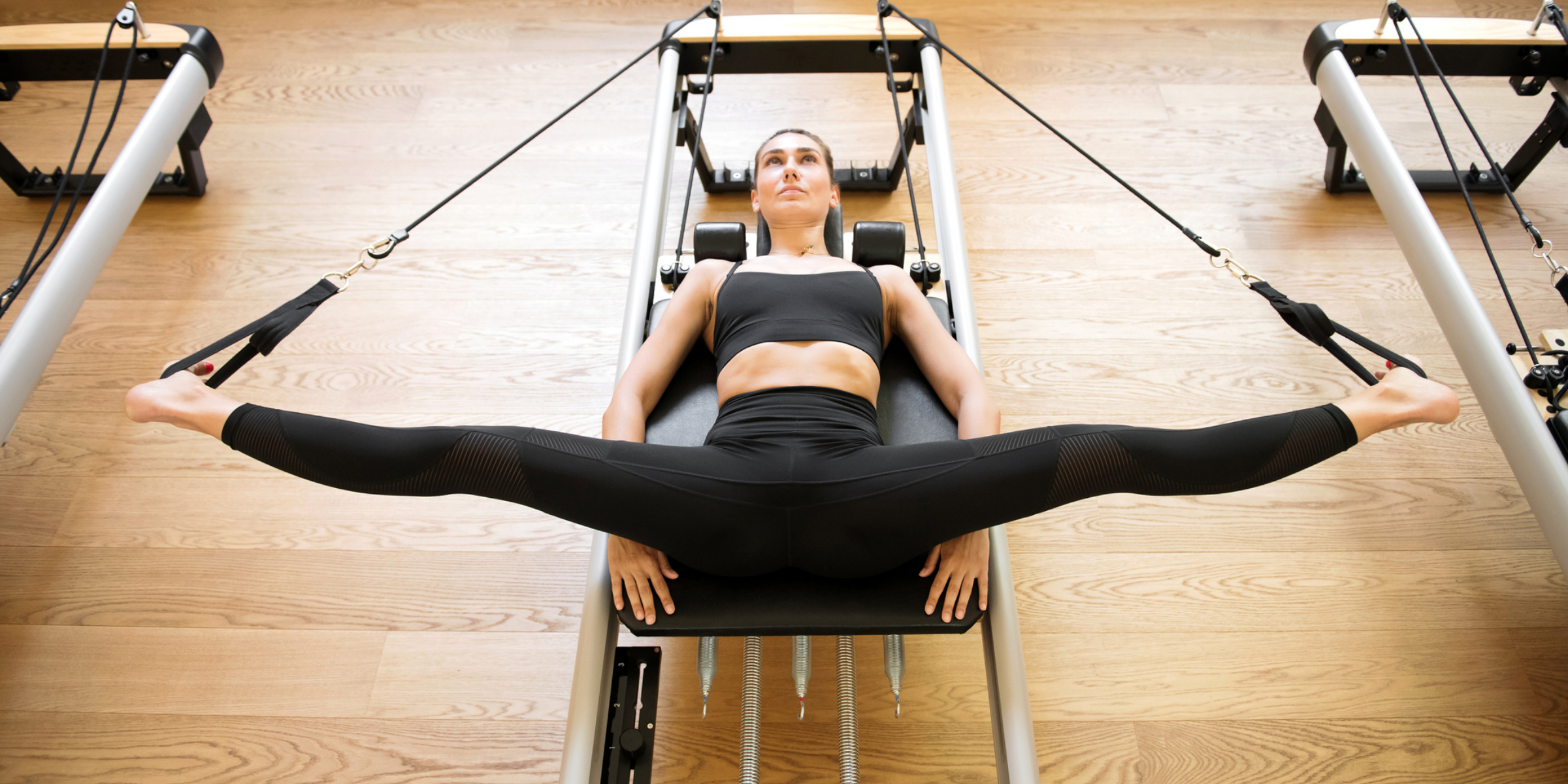
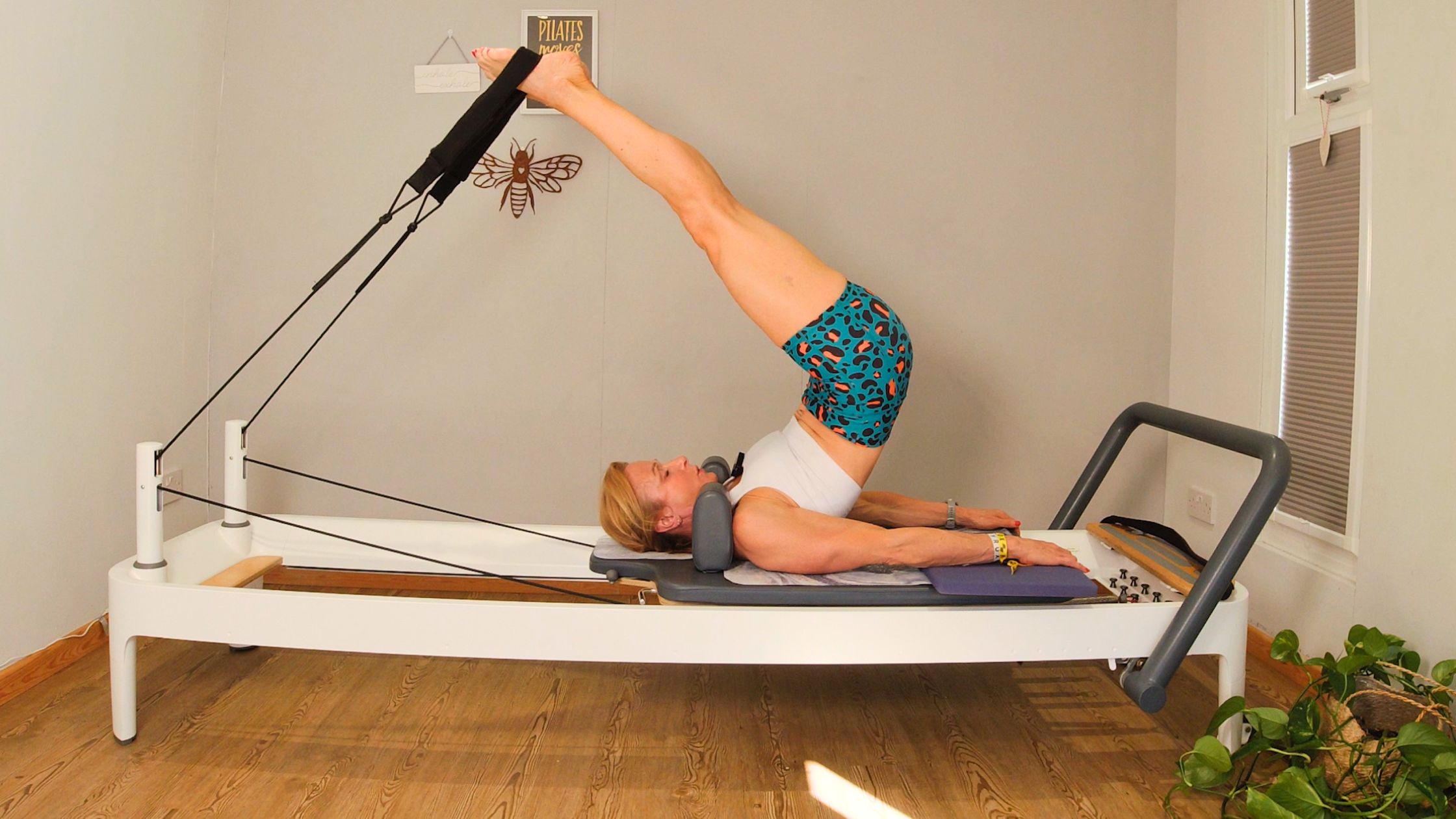
The Allegro reformer is made by Balanced Body and is one of the most widely used reformers in Pilates studios worldwide. It is built for commercial use, which means the quality and durability are at a level most home reformers cannot match. Whether it is worth buying for home use depends on your space, budget, and how seriously you practise.
It is the reformer I use personally and with clients. Here is a full lower body workout you can follow along with on your own reformer.
What makes the Allegro reformer different
The Allegro is designed around an eight-wheel suspension system that produces a noticeably smooth, quiet ride. The footbar is extra-wide and adjustable to accommodate a range of body sizes. Shoulder rests use a TwistLock mechanism for quick adjustment or removal, and the rope system (SoftTouch) adjusts easily mid-session. A three-position headrest provides cervical support across exercises.
The standout practical feature is that the Allegro stacks or stores vertically, making it usable in homes and studios where space is limited. Optional 14-inch legs raise it to the height of a full studio reformer, which matters if you train with instructors who work at that height.
The spring system uses Balanced Body’s own springs and offers up to 46 resistance combinations across five springs with varying tensions. This range makes it suitable for rehabilitation, beginner work, and advanced training without any compromise. For a breakdown of what the spring colours mean and how to set tension for different exercises, see my posts on reformer springs explained and adjusting reformer tension.
The main drawbacks
Cost is the most significant barrier. The Allegro is priced for commercial quality, and the upfront investment is substantial. Add optional extras like the 14-inch legs or custom upholstery and the cost increases further. Replacement parts and occasional maintenance should also be factored in over time.
It also weighs over 100 lbs (around 51 kg in the standard configuration), so while it has built-in wheels, moving it around is not effortless. The dimensions — 93 inches long in the standard model, 111 inches in the Stretch version — mean you need a genuine dedicated space for it, even with vertical storage available.
For beginners new to reformer work, there is a learning curve. The Allegro comes with a free training video, but working with a certified instructor for the first few sessions is strongly recommended to ensure you are using the equipment safely and getting the technique right from the start.
How it compares to other Pilates equipment
Against mat Pilates, the reformer adds adjustable spring resistance and a much wider range of exercises. If you want a sense of what reformer-style work feels like without having the machine, my reformer-inspired mat workout uses a band to mimic many of the movements.
Compared to the Cadillac or Trapeze Table, the Allegro is more compact and generally less expensive, while still covering the majority of reformer exercises. The Cadillac offers more exercise options but requires more space and budget.
Against the Pilates Chair, the reformer wins on versatility; the chair wins on footprint and cost. Against a Studio Reformer, the Allegro is similar in capability but more practical for non-studio settings, particularly because of the vertical storage option.
Things to consider before buying
The Allegro is a sound investment if reformer Pilates is an established part of your life and you have both the space and the budget for it. If you are new to reformer work, it makes more sense to spend time on a reformer in a studio first, build your practice, and then decide whether owning one is right for you. Buying before you know whether you will use it regularly is an expensive gamble.
If space is the main concern, measure carefully. The standard Allegro needs approximately 93 × 75 cm of floor space in use, plus clearance around it — the stored footprint is much smaller, but the workout footprint is not.