Pilates can effectively reshape your body and support weight loss, but don’t expect dramatic results overnight. You’ll burn 170-450 calories per session (depending on mat vs. reformer), with noticeable changes in body composition after 8-10 weeks of consistent practice. While it’s less intense than cardio workouts, Pilates offers joint-friendly strength building and impressive core toning. For best results, combine it with dietary changes and some cardio activity. The full transformation path awaits beyond the scale’s numbers.
The Real Calorie Burn: Pilates vs. Other Workout Options
When it comes to choosing Pilates for weight loss, understanding its true calorie-burning potential is essential.
You’ll typically burn between 170–350 calories in a mat session, while Reformer Pilates kicks it up to 240–450 calories per hour.
How does this stack up against other workouts? Well, your Pilates burn is comparable to brisk walking but falls short of running or spinning, which incinerate 400–600 calories hourly. The low-impact nature of Pilates supports long-term adherence and helps prevent injuries that might derail your fitness journey.
Dancing lands somewhere in the middle, similar to advanced Pilates sessions.
Don’t feel discouraged! While Pilates won’t burn calories like intense cardio, it’s still more effective than light stretching.
Plus, as you progress from beginner (4 calories per minute) to advanced (7.5 calories per minute), you’ll see improvements.
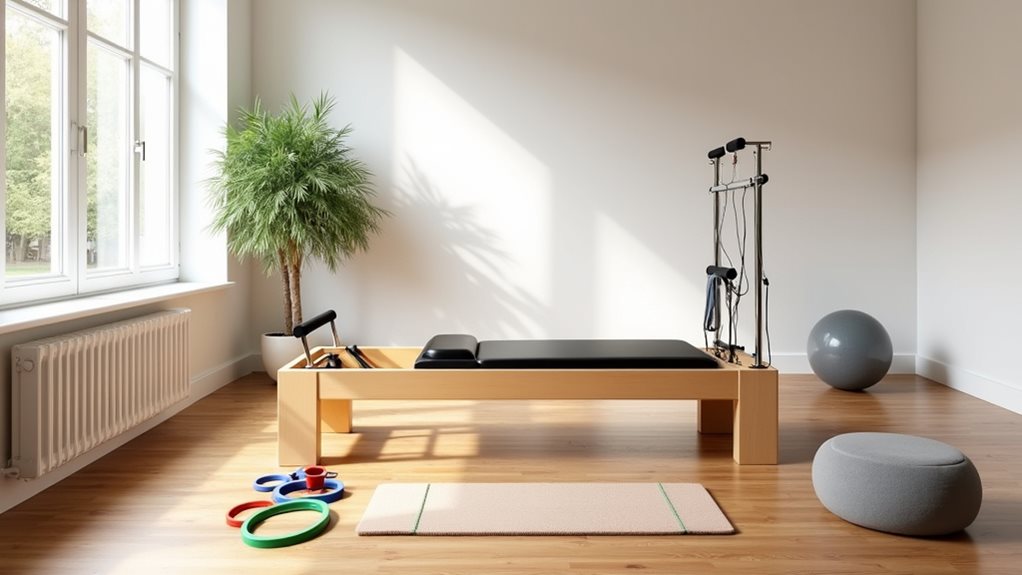
The Reformer’s variable spring resistance system offers eccentric muscle contractions that create a valuable afterburn effect, keeping your metabolism elevated even after your workout ends.
Beyond calories, the core strengthening elements of Pilates develop stability essential for athletic performance in virtually any sport.
Weight Loss Results: What Research Shows About Pilates
You’ll need patience if you’re expecting dramatic weight loss results from Pilates alone, as research consistently shows minimal changes in body weight over 8-16 week programs.
Studies reveal the real benefits might be in your body composition and metabolic health, with participants experiencing reduced body fat, increased muscle strength, and improved cholesterol levels despite stable scale numbers.
The research suggests Pilates works best for weight management when it’s part of a thorough approach that includes dietary changes and additional cardio exercise. A recent randomized controlled trial demonstrated that Reformer Pilates led to significant improvements in body composition among overweight and obese women following an 8-week program. However, one study found that obese middle-aged women who practiced Pilates three times weekly for eight weeks experienced significant reductions in anthropometric measurements including weight, BMI, and waist circumference compared to a control group.
Realistic Timeframe Expectations
Setting realistic goals for your weight loss expedition with Pilates starts with understanding what research actually shows about results.
Don’t expect overnight transformations—your body needs time to respond.
You’ll likely notice improved energy and muscle tone within a few weeks of consistent practice, but visible weight loss typically takes 8-10 weeks of regular sessions.
Research demonstrates that Pilates produces more pronounced effects in participants with obesity compared to those who are merely overweight.
For meaningful changes in body composition, aim to practice 3-4 times weekly for 45-60 minutes per session.
A meta-analysis found that longer practice duration correlates with increased weight loss when incorporating Pilates into your fitness routine.
Scientific Study Results
While personal testimonials about Pilates transformations abound on social media, concrete scientific research provides a more reliable foundation for understanding what you can actually expect.
The numbers don’t lie—a 2021 meta-analysis of 11 controlled trials found Pilates participants lost an average of 2.4 kg, reduced their BMI by 1.17 points, and shed 4.22% body fat.
These results are particularly impressive for those with obesity or who stick with it longer. Beyond just weight loss, Pilates reshapes your body by decreasing fat mass while maintaining or building lean muscle.
You’ll burn about 175-300 calories during a mat session and up to 450 calories with a reformer, depending on intensity. This calorie burn comes from core engagement that challenges stabilizing muscles throughout every exercise.
Pilates is especially beneficial as a low-impact exercise that reduces strain on joints while still promoting weight loss for individuals with overweight or obesity.
When combined with dietary changes, the results get even better—especially for your waistline, hips, and abdominal measurements.
Body Composition Changes: Beyond Just Numbers on a Scale
While your scale mightn’t budge dramatically with Pilates, your body’s composition often tells a different, more encouraging story.
You’ll likely notice notable changes in how your muscles appear and feel, with many practitioners experiencing up to 31% improvement in abdominal strength after just 12 weeks.
Your body’s muscle-to-fat ratio can shift favorably even when total weight remains stable, creating that toned, leaner look you’re after.
The existing research on Pilates indicates it may be beneficial as a supportive measure in overall weight management strategies, especially when combined with other interventions.
Muscle-to-Fat Ratio Shift
Although the number on your scale mightn’t budge notably after weeks of Pilates, considerable transformations could be happening within your body’s composition.
What’s really happening is a potential shift in your muscle-to-fat ratio, even when your weight remains relatively stable.
Research shows that while Pilates markedly reduces body fat percentage (by about 4.22% in some studies), it doesn’t typically increase lean muscle mass.
This means you’re losing fat without necessarily building substantial muscle. This effect is more pronounced if you’re obese rather than just overweight, and becomes more evident the longer you stick with your practice.
Don’t be discouraged by modest changes on the scale—your body might be recomposing itself in ways that matter more for your health and appearance.
Targeted Toning Effects
Despite what the scale might indicate, Pilates creates remarkable changes in your body composition that go far beyond weight loss alone.
You’ll notice your body transforming in ways numbers can’t capture.
Studies consistently show that Pilates excels at reducing central adiposity—that stubborn fat around your waist, abdomen, and hips.
After just 8 weeks of regular practice, you’ll likely see notable decreases in these measurements while others without Pilates might experience increases.
The most dramatic changes occur during 60-90 minute sessions practiced three times weekly for at least 12 weeks.
While Pilates won’t magically spot-reduce fat from specific areas (sorry!), it does target central adiposity more effectively than limb fat.
And here’s a pro tip: reformer Pilates might give you even better results than mat work due to its added resistance.
Timeline Expectations: When to See Weight Loss Results
When can you actually expect to see results from your Pilates practice? If you’re consistent, you’ll likely notice initial changes within weeks, not days.
Aim for three 50-minute sessions weekly, combined with healthy eating, for realistic weight loss of 1-2 pounds per week.
You’ll feel stronger and more flexible during your first month, even before major weight changes appear. Your posture will improve, and you’ll develop better body awareness early on. It’s recommended to attend 3-5 classes per week during your first month to establish proper form and technique.
The most impressive transformations, like losing inches from your waist and dropping multiple clothing sizes, typically happen after six months of dedicated practice.
Joint-Friendly Benefits for Sustainable Weight Management
The expedition to weight loss becomes much more sustainable when you choose exercises that don’t punish your body.
Pilates offers this gentler approach, using controlled movements that protect your knees, hips, and spine while still building strength. You’ll avoid the jarring impact that can derail your fitness quest through injury or pain.
What makes Pilates particularly valuable for weight management is how it strengthens the muscles supporting your joints.
As your core stability improves, you’ll move more efficiently in daily activities, burning calories without stressing your body. The progressive nature of Pilates allows you to gradually increase intensity as your body adapts.
For those carrying extra weight, Pilates provides a realistic entry point to consistent exercise—the true key to lasting results.
Your joints will thank you for choosing this path.
Mind-Body Connection: How Mental Health Impacts Weight Loss Success
Your weight loss expedition engages far more than just your body—it thrives or struggles based on your mental state. When you repeatedly attempt to lose weight with unrealistic goals, you’re actually setting yourself up for increased depression and anxiety, especially if you’re aiming for more than 10% of your current weight.
Body image concerns and emotional eating create powerful roadblocks in your quest. Many people don’t realize that anxiety can sabotage their treatment engagement, while depression might return if weight creeps back.
The silent saboteurs of weight loss: distorted body image and anxiety lurking just beneath your conscious efforts.
The good news? Addressing these mental health components dramatically improves your outcomes.
Before starting any weight loss program, including Pilates, consider your psychological readiness. Your mind-body connection isn’t just a catchphrase—it’s the foundation that determines whether your efforts will lead to lasting success.
Frequently Asked Questions
Can Pilates Help Reduce Belly Fat Specifically?
Yes, Pilates can help reduce belly fat as part of overall fat loss, but it won’t spot-reduce. You’ll see better abdominal results when combining it with cardio and healthy eating for at least 10 weeks.
Is Pilates Effective for Weight Loss During Pregnancy?
Yes, research shows Pilates can effectively help you manage weight during pregnancy. You’ll likely experience less gestational weight gain, improved body composition, and better posture while enjoying a safe, adaptable exercise that’s suitable throughout all trimesters.
How Does Pilates Compare to Yoga for Weight Loss?
Pilates burns more calories than yoga, making it slightly better for weight loss. You’ll engage your core more intensely with Pilates, while yoga offers complementary benefits like stress reduction that can support your overall weight loss path.
Can Seniors Use Pilates Effectively for Weight Management?
Yes, you can effectively use Pilates for weight management as a senior. It improves your body composition, builds lean muscle, burns calories, and boosts functional fitness—all while being gentle on your joints.
Do At-Home Pilates Workouts Provide Similar Weight Loss Benefits?
Yes, you’ll get similar weight loss benefits from at-home Pilates when done consistently and paired with dietary changes. You’ll burn 150-250 calories per session while building strength that supports long-term weight management.
Final Thoughts
Pilates isn’t a magic weight loss solution, but it’s definitely worth your time. You’ll reshape your body, improve posture, and build lean muscle while enjoying a workout that’s gentle on your joints. Combine it with cardio and healthy eating for the best results. Remember, the mental clarity and stress reduction you’ll gain might be just as valuable as the physical benefits. Your body—and mind—will thank you!