Yoga and Pilates offer different paths for beginners. Yoga focuses on mind-body-spirit connection with flexibility benefits, burning about 144-237 calories per session. Pilates targets core strength and controlled movements, burning 175-254 calories while sculpting muscles without bulk. Choose yoga for stress relief, flexibility, and spiritual growth, or Pilates for posture improvement and rehabilitation. Your ideal practice depends on personal goals—whether you want to build strength from the outside in or flow from the inside out.
The Core Difference: Understanding Pilates and Yoga Fundamentals
While both practices have gained tremendous popularity for their wellness benefits, Pilates and yoga couldn’t be more different when it comes to their roots and core philosophies.
When you step onto a yoga mat, you’re participating in an ancient spiritual tradition dating back thousands of years. Your practice engages all eight limbs of yoga, focusing on mind-body-spirit connection as you work toward enlightenment and holistic wellness.
Pilates, on the other hand, is a relative newcomer, developed in the early 20th century as a rehabilitative exercise system. It’s all about building your core strength—your “powerhouse”—through controlled, precise movements and specific breathing patterns. Both Pilates and yoga emphasize the importance of mindful breathing to maximize the effectiveness of each movement. Regular participation in Pilates enhances overall body control while improving muscle toning and flexibility.
Think of it this way: yoga flows from the inside out, emphasizing flexibility and spiritual growth, while Pilates works from the outside in, focusing on strength, stability, and physical rehabilitation. Yoga offers diverse styles ranging from gentle Hatha to dynamic Vinyasa, each providing unique approaches to mind-body fitness.
Calorie Burn and Physical Intensity: What to Expect as a Beginner
If you’re curious about which practice might give you a better workout, understanding the calorie burn and physical intensity of both Pilates and yoga can help guide your decision.
As a beginner, you’ll burn approximately 175 calories in a 50-minute Pilates session compared to 144 calories in Hatha yoga if you weigh around 150 pounds.
Don’t worry though—as you advance, those numbers climb considerably! Power yoga can torch up to 237 calories, while advanced Pilates might burn 254 calories in the same timeframe.
As your practice deepens, so does your calorie burn—with power yoga and advanced Pilates significantly increasing your fitness results.
Want to amp things up? Hot yoga classes can skyrocket your burn to 400-600 calories per hour, while adding weights or resistance to your Pilates routine boosts both calorie expenditure and muscle development. Yoga also offers mental health benefits by reducing cortisol levels, which can support your overall wellness journey. Remember that Pilates is especially effective for developing core strength, including abdominals and pelvic floor muscles.
Body Benefits: How Each Practice Transforms Your Physique
Beyond the calories you’ll burn in each practice, let’s explore what Pilates and yoga actually do to your body over time.
Both transform your physique, but in slightly different ways.
Pilates sculpts your muscles without bulking you up, targeting both major muscle groups and those smaller stabilizers you didn’t know you had.
It’s particularly amazing for core strength—abs, back, and pelvic floor—which dramatically improves your posture.
Yoga, meanwhile, excels at increasing your flexibility through sustained stretches, especially in styles like Yin and Hatha.
You’ll notice greater joint mobility and deeper stretches in your fascia (that’s your connective tissue).
While Pilates might give you better muscle tone and control, yoga offers strength through mobility.
Either way, you’ll stand taller and move with more confidence.
Yoga also provides notable cardiovascular benefits by lowering blood pressure and reducing the risk of heart disease through its combination of movement and mindfulness practices.
Pilates was specifically designed to strengthen from the inside out, enhancing spinal and pelvic control for better functional movement in daily activities.
Mental Wellness Impact: Stress Relief and Mindfulness Comparison
When you’re feeling stressed, both yoga and Pilates offer powerful mental relief through different approaches to mindfulness.
Yoga’s combination of meditation, deep breathing, and spiritual elements creates a more contemplative experience that activates your body’s natural relaxation response. The ancient practice of yoga has been recognized for its ability to reduce stress and promote mental well-being for thousands of years.
Meanwhile, Pilates builds mental wellness through intense concentration on precise movements and controlled breathing, helping you develop mindfulness while strengthening your mind-body connection. With its emphasis on core engagement, Pilates creates a foundation for mental focus that extends beyond the workout.
Mindfulness Depth Differences
Although both practices improve mental wellness, yoga and Pilates differ greatly in their approach to mindfulness. Yoga includes meditation as a core element, often beginning and ending sessions with quiet reflection to cultivate self-awareness and emotional resilience.
When you attend a yoga class, you’ll experience guided mindfulness practices, intentional breathwork (pranayama), and philosophical teachings that nurture your spiritual growth. It’s like giving your mind a full spa treatment!
Pilates, on the other hand, keeps its focus on concentration and precise execution of movements. You’ll develop impressive mental focus and body awareness, but without the meditation or spiritual components. Pilates primarily functions as a physical exercise system without incorporating spiritual frameworks. Yoga seeks to create harmony between body, mind, and spirit through its holistic approach. Think of it as mental training through physical challenge rather than inner reflection.
The breathwork in yoga calms your nervous system, while Pilates breathing supports your physical exertion.
Stress Reduction Mechanisms
Both yoga and Pilates offer powerful stress-busting benefits through distinct physiological pathways. When you practice either discipline, your body naturally lowers cortisol levels while releasing feel-good endorphins that boost your mood.
Yoga incorporates meditation and breathwork that activate your parasympathetic nervous system—your body’s “rest and digest” mode. You’ll notice anxiety melting away after just a few deep breaths in downward dog.
Pilates, meanwhile, creates mental clarity through focused movement patterns without formal meditation. A quick 15-minute Pilates routine can clear your mind as effectively as a longer yoga session.
Research shows consistent practice (three hourly sessions weekly for 8 weeks) greatly improves mental wellness. The breathing techniques you’ll learn in either practice become valuable tools you can use anytime stress strikes in daily life.
Mind-Body Connection Benefits
The mind-body connection lies at the heart of both yoga and Pilates, creating profound mental wellness benefits beyond simple physical exercise.
While you’re stretching and strengthening, you’re also building a sanctuary for your mind. In yoga, the spiritual elements and meditation nurture self-awareness, while Pilates builds mental focus through controlled movements.
Both practices offer powerful mental wellness advantages:
- They anchor you in the present moment, reducing anxiety and racing thoughts
- They improve emotional regulation, helping you respond rather than react to life’s challenges
- They enhance sleep quality, giving your brain the rest it desperately needs
You’ll find that whichever practice you choose, the mind-body benefits transfer into daily life, creating a calmer, more centered you beyond the mat or reformer.
Injury Prevention and Rehabilitation Potential
When you’re starting a new exercise routine, injury prevention should be at the top of your priority list. Both Pilates and yoga offer excellent protection against injuries, but in different ways.
Pilates strengthens your core muscles and teaches precise, controlled movements that improve your posture and alignment. This targeted approach helps prevent injuries from muscle imbalances and repetitive stress.
Precise movements in Pilates create a strong foundation, aligning your body to prevent imbalances before they become injuries.
You’ll also develop better dynamic balance, protecting you from falls and missteps.
Yoga, meanwhile, boosts your flexibility and joint mobility, reducing your risk of strains and sprains, especially in your knees and lower legs.
Both practices shine in rehabilitation settings too.
Pilates works wonders for back and neck pain with its supportive approach, while yoga’s gentle, restorative movements promote healing by increasing circulation and reducing inflammation.
Finding Your Fit: Matching Your Personal Goals to the Right Practice
How do you choose between yoga and Pilates when they both offer incredible benefits? The key is matching your personal goals with each practice’s strengths.
If you’re focused on:
- Core strength and posture – Pilates is your go-to, with its targeted movements that build stability while rehabilitating injuries like back pain.
- Stress relief and flexibility – Yoga shines here, combining breathing techniques with stretches that calm your mind while increasing range of motion.
- Specific health conditions – Both excel differently; Pilates helps with scoliosis and MS, while yoga eases arthritis and anxiety.
Your workout preferences matter too! Love equipment and precise alignment? Try Pilates. Prefer mindfulness with bodyweight exercises? Yoga might feel more natural.
Getting Started: Essential Equipment and Clothing Needs
Starting your Pilates or yoga expedition doesn’t require breaking the bank, but you’ll need a few key items to practice comfortably and effectively.
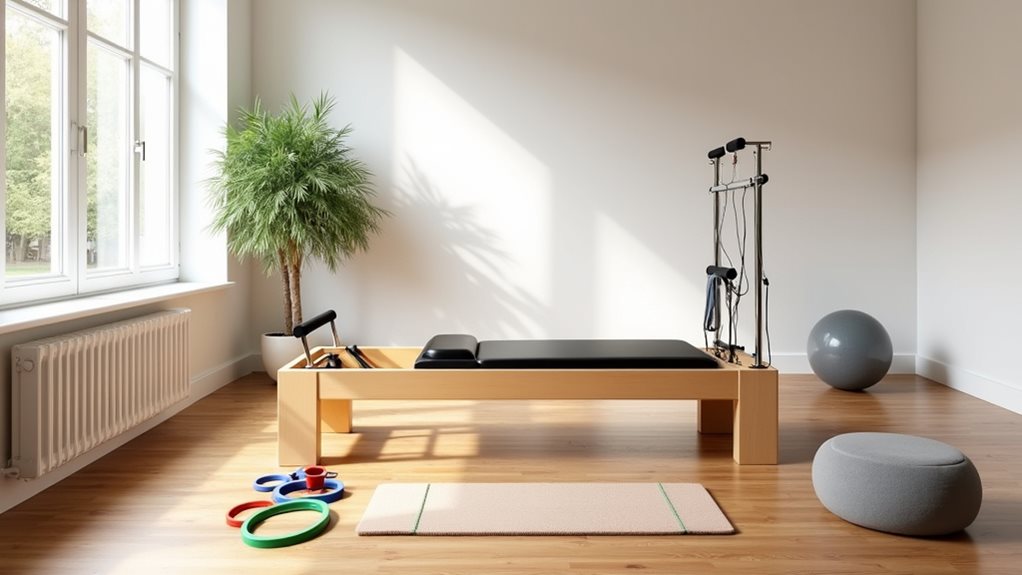
You’ll notice that while both practices share some equipment needs like mats and comfortable clothing, Pilates often calls for specialized tools like resistance bands and the magic circle.
Whether you’re setting up a corner of your living room or heading to a studio, understanding these basics will help you focus on your practice rather than worrying about what you might be missing.
Beginner Equipment Essentials
Anyone can begin their Pilates expedition with just a few vital items, without breaking the bank or overwhelming themselves with complex gear. The most important piece is a quality Pilates mat, which provides necessary cushioning and traction for floor exercises.
You’ll also benefit from grip socks that prevent slipping and help maintain proper form as you practice.
For an effective home practice setup, consider these three must-haves:
- A magic circle (Pilates ring) – adds resistance and targets core muscles
- Small Pilates ball – improves stability and deepens core engagement
- Resistance bands – versatile tools that assist with strength and flexibility
Don’t worry about investing in reformers or other large equipment just yet. These basic items will serve you well as you build your practice from the ground up.
Comfort vs. Functionality
When choosing attire for either Pilates or yoga, you’ll quickly discover the delicate balance between comfort and functionality that makes or breaks your practice experience.
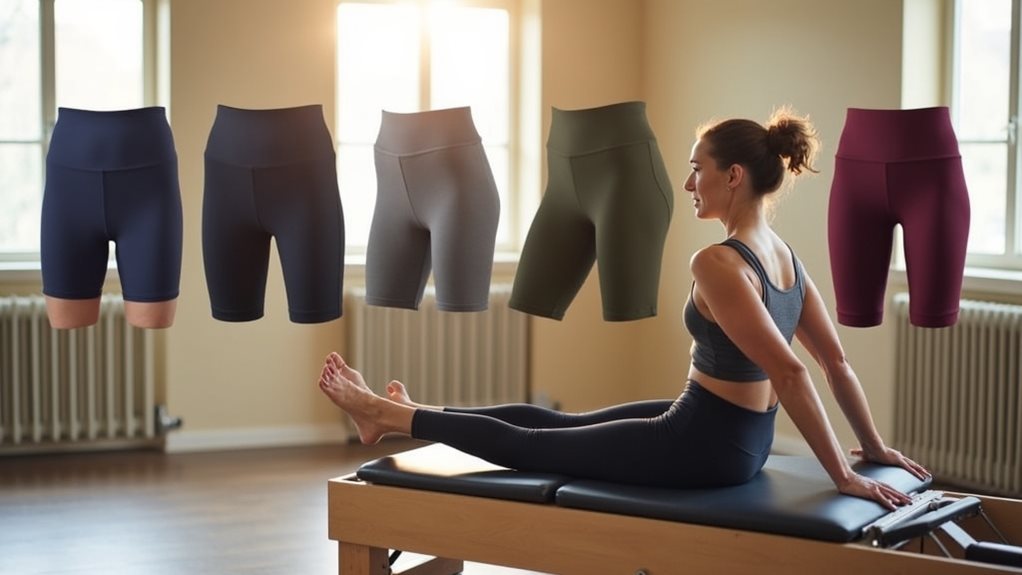
For Pilates, fitted clothing isn’t just a style choice—it’s a safety requirement. Those high-waisted leggings with thick waistbands will keep you secure during inversions, while fitted tops let your instructor check your alignment properly.
Yoga offers slightly more flexibility in your wardrobe choices. Breathable fabrics, especially cotton blends, help you stay comfortable during those challenging poses.
Remember, baggy clothing might feel cozy, but it can actually restrict your movement and become dangerous when working with equipment. The perfect balance? Form-fitting clothes that move with you, not against you.
Your outfit should be the last thing on your mind when you’re focusing on your practice!
Space Requirements Comparison
The three biggest differences in space requirements between yoga and Pilates might surprise you when setting up your home practice area.
While yoga requires minimal space and equipment (just your mat and a few props), Pilates often demands more room for specialized equipment like Reformers and Cadillacs.
When planning your practice space, consider:
- Size needs – Yoga needs just enough room for your mat plus 2-3 feet around it, while Pilates requires additional space for equipment.
- Ceiling height – Pilates needs at least 8-9 feet for standing exercises on equipment, yoga has no strict height requirements.
- Flooring – Both benefit from non-slip surfaces, but Pilates equipment may require sturdier, cushioned flooring.
You’ll find yoga’s simplicity makes it easier to practice anywhere, while Pilates might require more dedicated space.
Time Commitment: Class Durations and Practice Frequency
Understanding how much time you’ll need to commit is crucial when choosing between Pilates and yoga as a beginner. Typical Pilates classes run about 50-60 minutes, while yoga sessions can vary from 30-90 minutes depending on the style.
As a newbie, you’ll want to start with 1-2 Pilates sessions weekly, gradually working up to 3-4 as you build strength. For yoga, beginning with 2-3 sessions per week is ideal. Both practices encourage consistency rather than marathon sessions!
Pilates beginners usually start with 45-60 minute classes focusing on technique, while yoga offers more flexibility with shorter 30-minute options for those easing in.
Tracking Your Progress: Measurable Improvements to Expect
Five distinct improvements will show you’re making progress in your Pilates or yoga path, regardless of which practice you choose. Your body will speak volumes as core strength develops and posture improves.
While Pilates typically delivers faster strength gains through targeted exercises, yoga excels in flexibility through deeper stretches and longer holds.
You’ll notice these key transformations:
- Better posture and reduced back pain as your core muscles strengthen
- Increased energy and mental clarity from regulated breathing techniques
- Improved body composition as muscle tone increases and metabolism shifts
Don’t underestimate the mental benefits! Yoga’s meditative elements directly reduce stress and anxiety, while Pilates offers physical stress relief.
Both practices gradually transform not merely your physical shape but your overall well-being—you’ll sleep better, think clearer, and move with newfound confidence.
Frequently Asked Questions
Can I Practice Yoga or Pilates During Pregnancy?
Yes, you can practice modified prenatal yoga or Pilates during pregnancy. Always consult your healthcare provider first and work with qualified instructors who understand pregnancy-specific adaptations to guarantee your safety and comfort.
How Long Until I See Visible Results From Either Practice?
You’ll notice initial results within 2-4 weeks through improved flexibility and posture. More visible changes in muscle tone typically appear after 6-8 weeks of consistent practice (2-3 times weekly) with either Pilates or yoga.
Are Online Classes Effective for Complete Beginners?
Yes, online classes are effective for complete beginners. You’ll gain similar physical benefits to in-studio training, with studies showing high adherence rates and considerable improvements in core strength, flexibility, and overall fitness.
Can Yoga or Pilates Help With Weight Loss Goals?
Yes, both can support your weight loss goals. Pilates typically burns more calories and targets core strength, while yoga varies in intensity. For maximum results, combine either practice with a caloric deficit diet.
Should I Try Both or Focus Exclusively on One Practice?
Try both initially to discover your preferences. You’ll benefit from Pilates’ core strengthening and yoga’s flexibility. Based on your specific goals and how your body responds, you can later decide to specialize or continue both.
Final Thoughts
Whether you choose Pilates for its precise muscle targeting or yoga for its spiritual connection, you’ve now got the tools to make the right choice. Both practices offer incredible benefits for your body and mind, just in different ways. Remember, the “best” option isn’t about what’s trendy—it’s about what resonates with your personal goals and feels right in your body. Trust yourself and enjoy the experience!