If you are deciding between a Pilates chair and a Pilates reformer — whether for a home studio or to guide what you use at a local studio — here is a straightforward comparison of the two.
| Chair (Wunda Chair) | Reformer | |
|---|---|---|
| Price range | £800 – £1,700 (US$1,000 – $2,000) | £1,600 – £3,000 (US$2,000 – $4,000) |
| Approximate size | L80cm × W65cm × H143cm | L234cm × W75cm × H33cm |
| Approximate weight | 55kg | 100kg |
These figures vary across brands and models — use them as a rough guide rather than exact specifications.
The Pilates chair
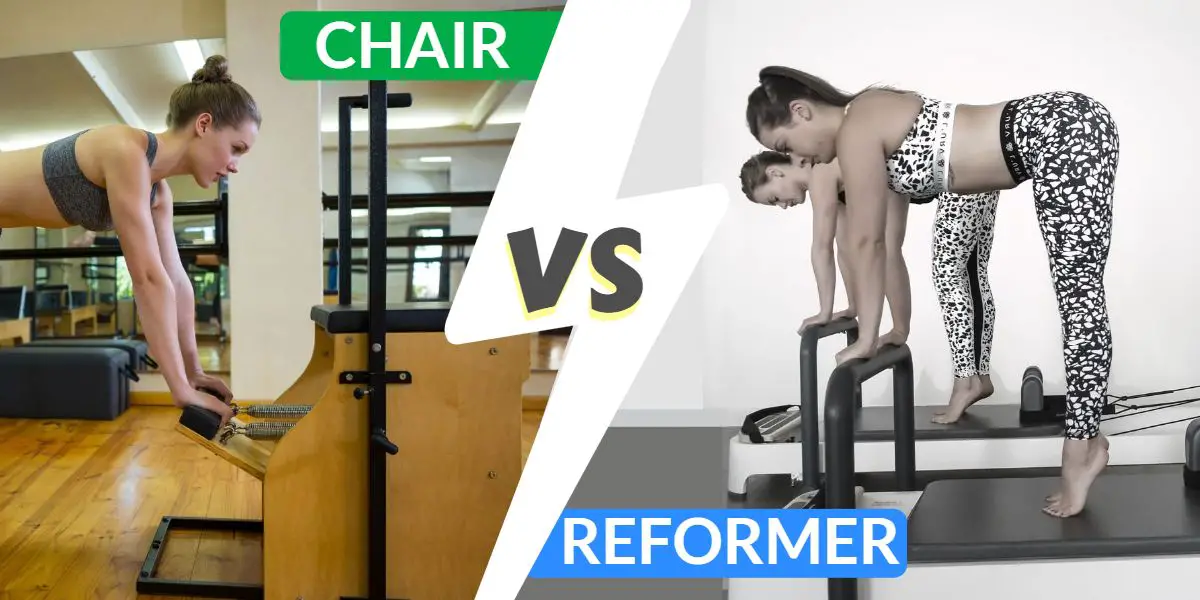
The Wunda Chair is a compact piece of equipment: essentially a box with a spring-loaded pedal that creates resistance. Despite its size, it is a genuinely challenging piece of kit that allows for more complex and demanding exercises than mat Pilates, particularly for core strength, balance, and stability work.
Joseph Pilates invented the chair himself, so it has the same pedigree as the reformer. Its main advantages for home use are the smaller footprint, lower cost, and easier storage. It sits comfortably in a corner when not in use and does not require the dedicated space that a reformer demands.
The downside is that it is not beginner-friendly. The chair requires solid foundational technique — you need to know your alignment and how to engage your core before using it effectively. Coming to it before you have that baseline tends to produce poor form and limited benefit. I would always recommend learning the fundamentals on the mat before moving to the chair.
The Pilates reformer
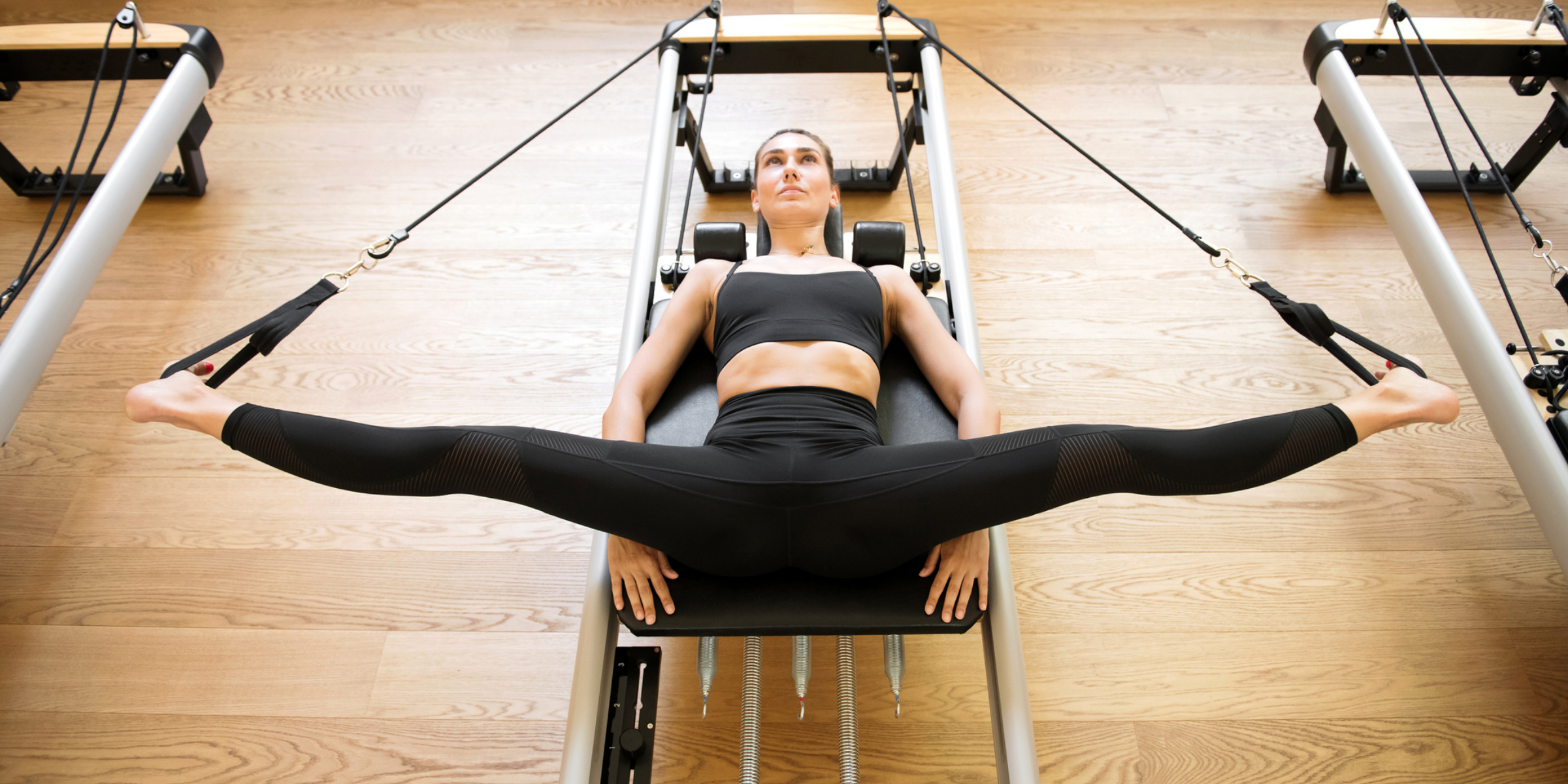
The reformer is a sliding-carriage machine with a spring and pulley system that offers a far wider range of exercises than the chair. Almost every mat Pilates exercise can be adapted for the reformer, and there are exercises unique to the reformer that cannot be done on a mat. The adjustable spring resistance means you can continuously increase the challenge as you get stronger, which the mat alone cannot offer in the same way.
I absolutely love my reformer. It has taken my practice to a different level, both for my own training and for working with clients. However, I have to be honest: it was the last piece of equipment I bought, and that was deliberate. As an instructor it makes clear financial sense, but for someone who is not teaching Pilates professionally, the size and cost require serious thought. You need to be confident you will use it regularly to justify the investment.
The reformer also requires proper instruction. It is not something to set up at home and figure out alone — working with a trained instructor to learn the exercises and how to use the machine safely is essential, at least initially.
Which is better for a home studio?
For a home studio, the chair is the more practical choice for most people. It is less expensive, takes up significantly less space, and still provides a demanding and varied workout that goes well beyond mat Pilates. If you are an instructor or someone who already has a well-established reformer practice and the space to accommodate the machine, the reformer is the superior piece of equipment. But for everyday home use, the chair offers excellent value and much less compromise on space.
There is also no reason you cannot have both. Many practitioners keep a chair at home for daily work and use a studio reformer for supervised sessions — this gives you the best of both without requiring a dedicated room at home.
I have been creating content for both pieces of equipment on my YouTube channel — search for Pilates with Donna Finnie to find chair and reformer workouts you can follow along with.
For more detail on what the reformer offers specifically, see my post on the pros and cons of the Pilates reformer. If you are considering buying and comparing different models, see my guide to choosing a Pilates reformer.