The Pilates reformer looks more intimidating than it is. It’s essentially a sliding platform with an adjustable spring resistance system — and once you understand the basics, it opens up a range of exercises that mat Pilates simply can’t replicate.
Here’s an honest look at the pros, cons, and what to know before you try it.
How the reformer works
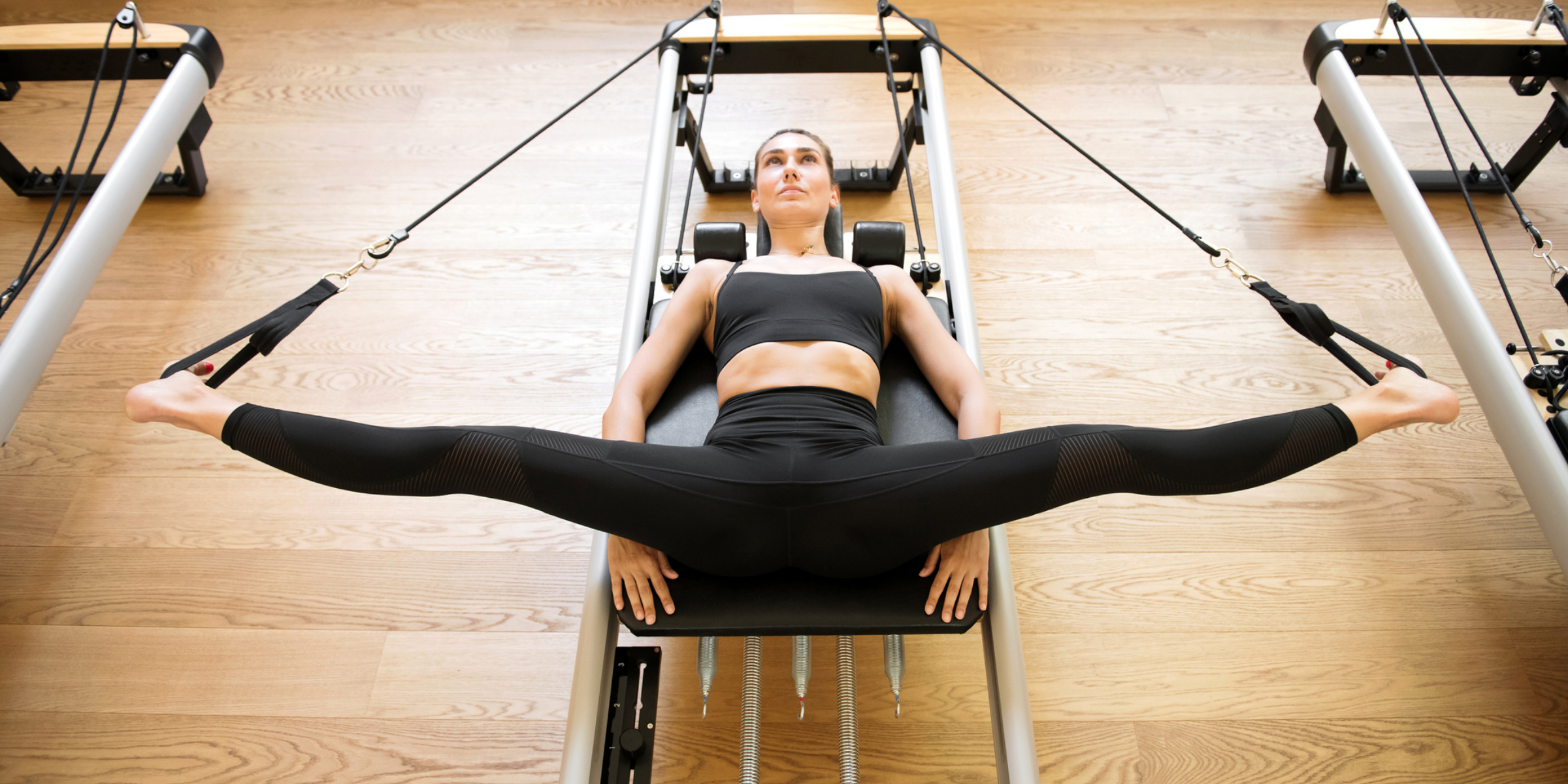
The machine has four main components:
- The carriage — a padded platform that slides along the frame. You lie, sit, kneel, or stand on it depending on the exercise.
- The springs — connect the carriage to the frame and create resistance. More springs equals more resistance; fewer springs means the carriage moves more freely, which can actually make exercises harder by demanding more stability.
- The foot bar — an adjustable bar at one end where you push with your feet (or hands for some exercises).
- The straps — at the opposite end, connected to the carriage, for arm and leg exercises that require pulling rather than pushing.
Spring colours indicate resistance level — typically yellow (very light), blue (light), red (medium/full), and green (heavy), though this varies by brand.
The benefits
The reformer adds genuine resistance that mat Pilates can’t match, which means faster progress in strength, tone, and postural improvement. The pulley system also guides your movement in a way that builds body awareness — you feel very clearly when your alignment is off because the machine responds to it.
The versatility is also a significant advantage. Hundreds of exercises are possible on a single machine, at every level from beginner to advanced. Unlike mat Pilates, where progression can plateau, the reformer continuously offers new challenges.
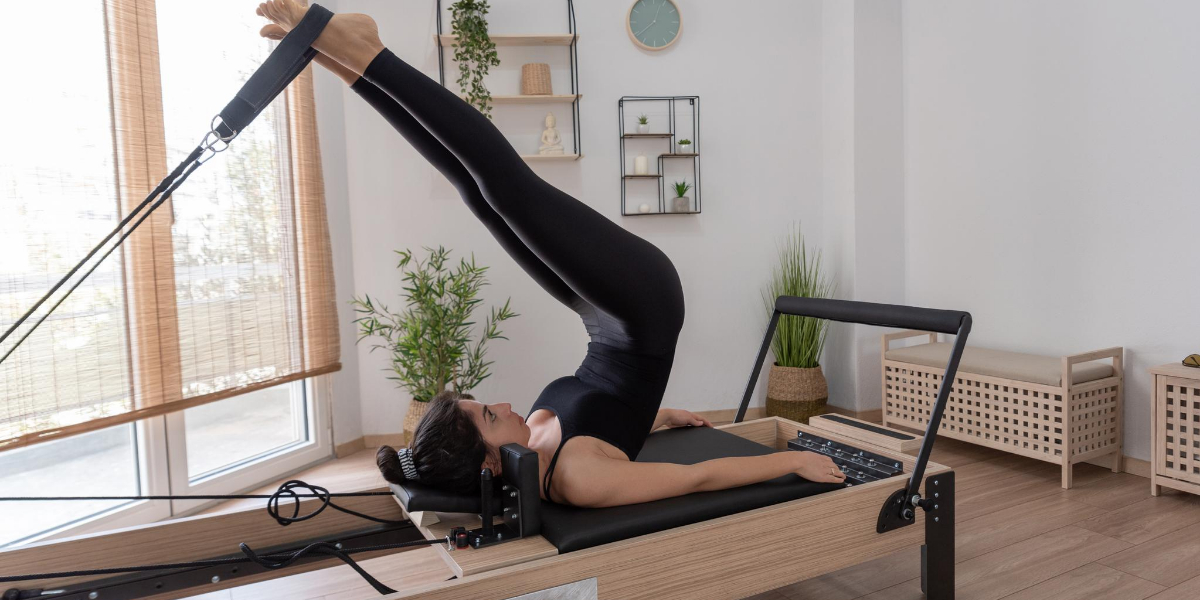
For a sense of what reformer work looks like in practice:
The downsides
Cost. A decent home reformer starts at around £500 and goes up to £2,000+ for studio-quality equipment. Studio reformer classes are also more expensive than mat classes — typically £20–£35 per session.
Availability. Not every studio has reformers. Mat Pilates classes are far more widely available, which matters if you rely on classes for structure and motivation.
Learning curve. The reformer rewards people who already understand Pilates principles. If you jump onto one without a foundation in core engagement, breathing, and movement control, you’ll get much less from it and risk poor technique. Mat Pilates first is the right approach for beginners.
Is it better than mat Pilates?
Not better — different. Mat Pilates teaches you to move with control and precision using only your body. That foundation is genuinely valuable, and many intermediate and advanced exercises on the mat are harder than their reformer equivalents. The reformer adds resistance, variety, and feedback that accelerates certain aspects of progress.
If you’re new to Pilates, start on the mat. Once you’re comfortable with the principles, adding reformer work makes the whole practice richer. Here’s a good starting point for beginners:
You can find more free beginner and intermediate workouts on my YouTube channel to build your mat foundation before moving to the reformer.
Is it worth buying for home?
If you’re already practising Pilates regularly and want to deepen your home practice, yes — eventually. In the meantime, a studio membership or a few reformer classes to understand how it works is money better spent than buying one before you’re ready to use it well.
For a practical guide on choosing between models, see my post on choosing the right Pilates reformer. If space is a concern, see my guide to foldable Pilates reformers. And if you’re weighing up a reformer against a Pilates chair, see my comparison of Pilates chair vs reformer.